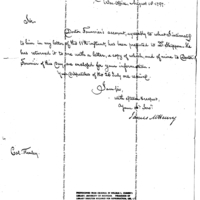
Hodgdon should forward ten suits of infantry clothing to Ensign Boote at Elizabeth Town and twelve suits of artillerists clothing to Lieutenant Marschalk at New York.
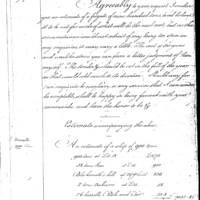
Frigate Constellation required a heavy anchor to "keep her from accidents during heavy squalls or spurts of wind,". McHenry requested an update on the one he requested had been transferred from Portsmouth to Baltimore.
Wigginton describes his suspicions regarding a wagoner who he suspects is stealing cannon balls from the public. He gets his 'negroes' to break into the house and take as many as is convenient at the time. He is very artful at concealing them from the public. His wagons generally travel at night with the balls covered with hay and straw.
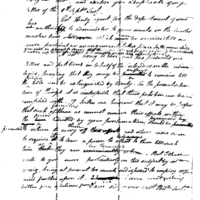
August 14th letter covering copy of Purdy's current account as given to Caleb Swan totaled $40.00. Upon examination by Simmons, totaled owed was changed to $86.00. Difference arose from want of vouchers for payments made to sundry recruits. Money cannot be annexed to Purdy's account as credit until vouchers are produced. Amount details listed.
Simmons writes from outside Philadelphia. Presumably some of the staff has relocated outside of Philadelphia as a result of the Yellow Fever epidemic. Simmons received 2 letters from John McHenry that informed him of James McHenry's indisposition. Simmons recounted duties of War Office staff, wishes that McHenry recover soon, and assures him that he will attend to his duties of his office, pay attention to the calls of the department, and keep him informed. Doctor Gillasspy mentioned as overworked attending to sick on Frigate, and in need of surgeon's mate. Lieutenant McRea is getting better.
Certification that $14.71 is due Private Henry Sanders of Capt. Lyman's Company, 2nd Regiment, being his pay from November 1, 1796 to February 19, 1797, the day his time expired.
Noted assistants quitting service and general malady in Philadelphia. W. Weekly delivered two casks w/o invoices addressed to Governors of Kentucky and North West Territory which will be forwarded immediately.
Mrs. Harris is suffering from a sore mouth and throat. Mr. Bass tells Harris that the Watch Coats and blankets are finishing up for the Western posts and that the order for the clothing in general is in the contract. Harris expresses his fervent wish that the fever raging in Philadelphia may be arrested.
Informed Simmons that Haskell wrote J. Stagg with power of attorney to settle his accounts and send Haskell the balance due him. Haskell verified he enclosed all the necessary documents. Haskell never heard word from Stagg, he then wrote Stagg again informing him that he would have to draw a balance on his account due to business. Lack of response made Haskell anxious. Currently building a house and plantation therefore Haskell could not go to Philadelphia to settle his accounts in person.
Sends his muster and pay rolls. Captain Bruff presumes that this will be his last submission of muster and payrolls for this command. He mentions his account, and paying the Fort's garrison in July, and possibly in August. Discusses state of recruiting at the Fort as dull business and disheartening because of the lack of reenlistments. Of twenty-five eligible reenlistments, only a few will reenlist "in this country." Captain Bruff mentions the problems resulting from the transfer of recruits in companies recruited by officers as destructive to officer ambitions.
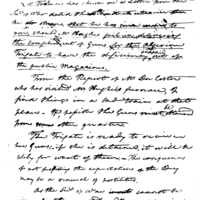
Wolcott discusses Mr. Carter's report on the fitness of Mr. Hughes' furnace and finds an unacceptable situation at that place. If Hughes is not able to supply the guns for the Algerian frigate, then the guns should be obtained from the public magazine. The frigate is ready for the guns and if it is detained, it is solely due to the want of them.
Reports from Ebenezer Bullard about assistance at the factory. Prefers not to discharge Bullard but seeks to suspend him until he resigns or quits. Recommends William Carson, a friend of Captain Finley, who has good blacksmith skills. Seeks instruction for affairs before he leaves for Philadelphia.
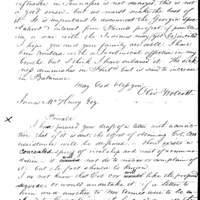
Wolcott expresses concern about the continued influence of William Blount in Tennessee and how it could provoke a potential Indian crisis. It is important to disconnect the Georgia speculations from Blount's project or else a war with the Indians may result. He has been ill but reports that the sickness decreases in Philadelphia but increases in Balitmore.