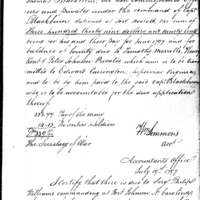
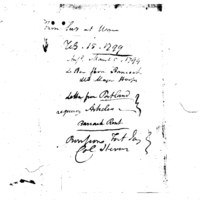
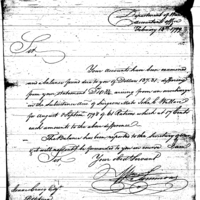
Certification of payments; $198.61 pay to Ensign William R. Boote, 3d Regiment of Infantry, the non commissioned officers, and privates of the detachment.
Agreeable to McHenry's direction, Wilkins reports that he examined vouchers and has an explanation from Captain Butler. Appears they were traveling expenses including subsistence and forage for horse, which is a customary allowance of Quarter Master Department.
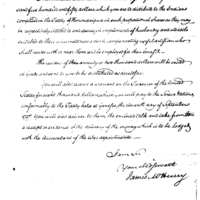
In addition to enclosing the charges against Major Rivardi by fellow officers, McHenry stresses the importance of continuing to work with the current contractor until a new contract can be arranged with another contractor. It is imperative that the flow of supplies to the troops not be interrupted.
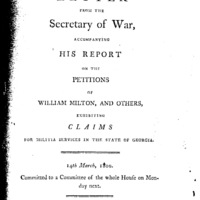
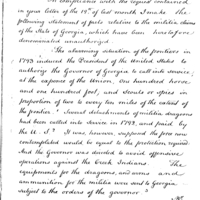
Freeman clarifies the situation regarding the Georgia militia and the US Army beginning in 1793. Freeman asserts that he was never properly informed the total number of militia active in the state, and determined that those not mustered were unauthorized by Congress and the Department of War, although they were activated by the Governor.
E. Telfair, governor of Georgia, used militia troops and materials for unauthorized offensive expedition into Creek Country on the pretext that he was protecting Georgia's frontier.
Gates recommends that elderly 42-year-old Abraham Rand be discharged from the service due to his extreme intemperance. He notes that he now commands 74 men and does not have enough clothing and blankets for them.
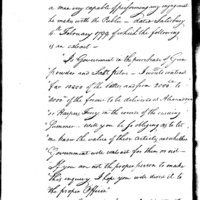
Requests McHenry to pay 7 bills drawn on him by Quartermaster General. Lists accounts. Encloses list of ordnance and military stores sent from New London to Knoxville.
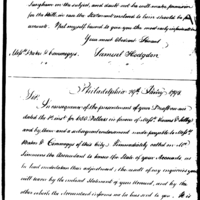
Recognizes need for a more detailed account for Congress and the Secretary of War, who wishes Hodgdon to view all public accounts. Will present a report to Congress.