Hamilton proposes a plan to connect the different parts of the military system, especially with regard to procuring and issuing supplies. Specific channels through which supplies are to be passed to the troops are particularly essential.
Hamilton believes that the four months' pay should be advanced to the officers and that drums and fifes should accompany the clothing since music aids recruitment. He needs additional copies of the recruiting instructions since he will supply each regiment with twenty copies.
"The Commander in Chief having approved the idea of calling the Paymaster to the Seat of Government, I send you, enclosed by his direction, an order for him repair to the Seat of Government."
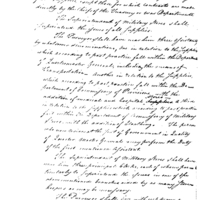
Delineates responsibilities to provide and issue supplies. The Purveyor is responsible to procure supplies and to assign contracts. The Superintendent of Military Stores shall issue all supplies. Each should assign a deputy to each army to procure and issue supplies for that army. Refers to different departments and their responsibilities. Outlines duties for the Inspector General and deputy inspector general, as well as for the Paymaster General, regional paymasters, and deputies, and the Quartermaster and regimental quartermasters and deupties. Each Brigade should have a commissary of forage. Outlines payment procedures. All documents must be countersigned by the appropriate authority.
Along with a discussion of the trial of Capt. Frye and Doctor Osborne, Hamilton reports on sundry regimental nominations, the pay of officers, and the acquisition of equipage and supplies.
Hamilton's recommendations on the organization of certain portions of the army and his views on the proper role of the Army's Quartermaster General. Asks Wolcott to talk to the Secretary of War about these matters
McHenry notifies Adams that he will announce the new officers' appointments, as per Adams' instructions. Discusses the ramifications of a recent act of Congress concerning the right of the president to fill vacancies in the army & navy officer corps; concludes that Adams is able to approve additional officers because of this act, and promises to send Adams a list of suitable men. Considers the apportioning of officers to the army by state versus making sure meritable officers fill the posts. Discusses candidates for the office of Inspector of Artillery. Notes issue of relative rank between officers for the provisional army, as the offices were created simultaneously but are being filled consecutively; for this reason, seeming to contradict his promise earlier in the letter, McHenry advises against issuing any commission announcements until all can be announced simultaneously. Notes that officers raised in 1792 did not receive their commissions for a full year after appointment. Forwards correspondence from General MacPherson, and states that the Recruiting Service for the new regiments will begin soon.
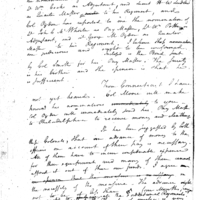
Explains misunderstanding between Captain Vance and Lieut. Simmons, accountant of the War Department. General Hamilton ordered a court martial, which released Vance from arrest. Submits letter as evidence, and raises questions about process of arrest and trial with a military court.
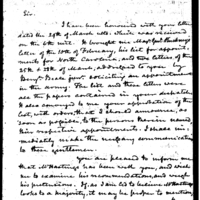
Received Major General Pinckney's list of appointments for North Carolina. Reports no vacancy in certain regiments from Massachusetts. Discusses authority of the President to make appointments and other commissions, and requests officers for a new battalion and regiments. Requests patience while they sort out the details.
Seagrove sends to General MacPhearson a list of men held in custody and charged with treason for aiding John Fries' campaign against the Direct House Tax of 1798. Fries was Captian of Bucks County Militia.
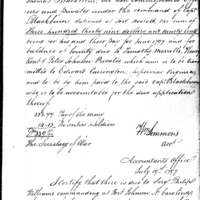
The Power of Attorney has been given to James Miller and should be deposited at the War Office on April 18th. Any money that Miller wants prior to that time should be paid to him. All the bills drawn on Hodgdon which may come to hand after that time should be accepted by him.