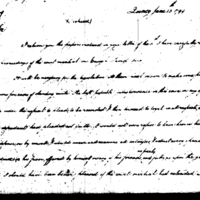
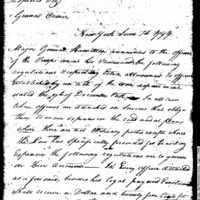
Hamilton chastises McHenry for the inefficiency of the War Department in furnishing supplies. Delays attend every operation and articles are forwarded in a most incomplete manner. It is the Revolutionary War all over again only with caricature. It is truly farcical. The myopic eyes of the purveyors can see nothing beyond Philadelphia. Unless more competent agents can be found to procure and forward supplies, the service will suffer deeply
Provides a list of appointed officers. States that he is pleased that the recruiting service is doing well in Connecticut, which he says is doing well everywhere.
Ellery reviews the requirements for those serving on General Courts-Martial. Only those officers of the highest rank are authorized to impose the sentence of death.
Writes that he is in want of the articles of war"and other supplies including axes, bowls, camp kettles, tents, stationary, and wagons. Complains that the Secretary of War is underpaying him. Concludes by stating that he wishes he had declined the position of Agent for the War Department in New York, grounding his complaint in his loss of money and inability to collect compensation, but that since he had accepted the position he will maintain it.
Routine correspondence concerning the appointment, transfer, promotion, discharge, desertion, leave, and assignment of individual officers and soldiers.
Discusses the legal particulars arising from Ensign David Fero's refusal to lodge a plea at his court martial; believes any different action by the court would not have affected Fero's stance, and so concurs with McHenry that Fero should be dismissed.
General Order: Explains the rules and regulations for constituting general courts martial and specifies which officers are entitled to participate in said courts martial. Explains the obligation to allot one half gill per day of liquor to the troops if a supply of said spirits is available.