Statement of "sufferings and losses in the Cause of American Liberty." Maxwell, originally from Rhode Island lived in Nova Scotia, but moved from the British Province due to his patriotism.
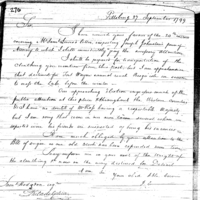
Major Isaac Craig discusses troops' clothing and local politics with Samuel Hodgdon, Commissary of Military Stores. Also mentions that he received his letter regarding Joseph Johnston's power of attorney.
Mr. Fisher is going out under the direction of Captain Vance. Wilkins wants to know whether Fisher should settle with Hodgdon for his disbursements previous to this period or with Wilkins. If Hodgdon settles with Fisher for five hundred dollars, Wilkins should not be charged with same. If Wilkins is to settle with him, he needs to know the time of Fisher's engagement and the terms under which he is to be paid.
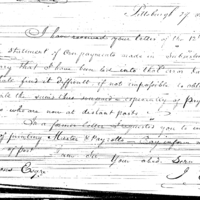
Major Craig informs William Simmons of the difficulty of in obtaining reimbursement for overpayments made to officers that have subsequently deployed to western posts.
Hamtramck provides his assessment of the barracks, troops, arms, and supplies at Fort Fayette. He wonders why the Indian boundary lines have not been run when the contract states that that they should have been run in May of 1798.
Hamilton explains his conception of the appropriate manner in which vacancies in the officer corps are to be filled. Generally, vacancies are to be filled by succession and not by the insertion of new men.
Routine correspondence concerning the appointment, transfer, promotion, discharge, desertion, leave, and assignment of individual officers and soldiers.
Hamilton prefers Oxford over Uxbridge for winter quarters because the former has more wood for hutting and fuel than the latter. He directs Rice to purchase the right of soil if it can be had at a price comparable to that which is asked for the use of the land and the wood.
Busy with work most likely because his assistants left city due to outbreak of yellow fever. Information to be sent by post to Craig will go out in two or three days time.