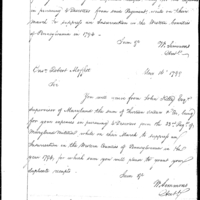
Parker notes that there have been no stores received at Carlisle since his last return and not many delivered. The troops need cartridges and other articles which he will draw soon. Thomas Duncan is currently in the city and Parker thinks it would be a good time to buy the public land. Duncan is the attorney for the heirs of Wilson and has it in his power to settle the dispute. If it is not settled by Spring, they will fence off the public from the water entirely.
Routine correspondence concerning the appointment, transfer, promotion, discharge, desertion, leave, and assignment of individual officers and soldiers.
Hamilton asks Tousard to work with Major Hoops to prepare a system of regulations for the exercise of the Artillery, and for the police and service of artillerists in camps and garrisons.
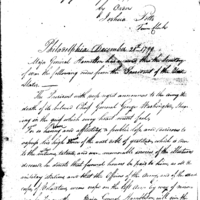
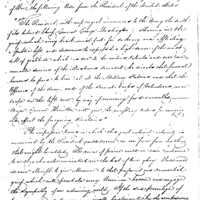
Hamilton is sending a copy of an order to Macpherson, who is in charge of the ceremonies, regarding the funeral honors to be paid in Philadelphia to George Washington.
Major Tousard has been charged by General Hamilton with the superintendence of the funeral honors for General Washington. Tousard should be furnished with as many horses as he needs to perform his duties.
Orders of Alexander Hamilton regarding the funeral arrangements to be made at all military stations and offices of the Army in honor of the late General George Washington.
Discusses clothing and other articles. Shot bring produced at Hope's furnace but not yet in sufficient quantities. Mentions vessels headed to Savannah, on which articles can be forwarded.
Routine correspondence concerning the appointment, transfer, promotion, discharge, desertion, leave, and assignment of individual officers and soldiers.
Alexander Hamilton explains the regulations related to the funeral honors for the recently deceased George Washington in the cities of Philadelphia and New York.
Encloses two letters from the President outlining his approval of money used by the War Department, with special instructions for the accounts of James Prop and Samuel Lewis.
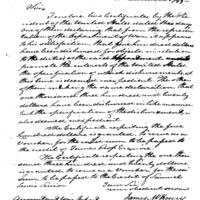
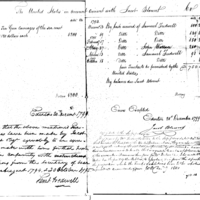
An account current with Jacob Blount for making ten carriages of the seacoast kind at a cost of $120 each. Tredwell certifies that the carriages have been made in conformity with the directions of the Secretary of War.
de Kraffs asks for Hodgdon's recommendation for a position in a business in one or another honest branch. He has had extensive employment in surveying and drawing until the unhappy time when the fever infected Philadelphia and has had little success in the land business. He has a large family and has had promises from several gentleman but still would like Hodgdon's help.
A deduction in the price of carriages stipulated in Tredwell's first agreement with Jacob Blount will be required to meet the specifications of the Secretary of War. Since the value of the carriages are not known, that account will be left open. As soon as that amount is known, it should be transmitted so as to be drawn by Mr. Blount.