Routine correspondence concerning the appointment, transfer, promotion, discharge, desertion, leave, and assignment of individual officers and soldiers.
In expectation for the time in which wages for clerks will be determined by the War Department, Samuel Armin - a single parent of four children - writes McHenry asking to please consider him for an increase in pay. Cites his integrity, good character, and two letters of recommendation.
List of clerks from War Office. Robert Ellis, John Brown, Benjamin Betterton, John Abbott, Johnathan Halsted, John Watson, Jeremiah Condy, James Eakin, James Hodnett. Simmons noted skills of clerks warranted an increase in pay and requested Sec. of War's authorization for additional sum.
Accounts of John Mackey, Pay Master and Store Keeper at Harper's Ferry Armoury had extraordinary charges Simmons felt required McHenry's decision. Details pertained to canal digging, dam, labor, and wages. Info on warrant 3532 dated Dec. 15, 1798.
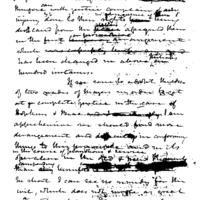
Discusses the power of the President to dismiss military officers and instances where such action is or has been appropriate. Also considers the attitudes of Congress towards the Army.
McHenry advises that it would be a mistake to depart from the rules regarding relative rank, even though in the case of Beal and Hopkins, Beal is the preferable officer. Adding grades to ranks or departing from the rules would create more difficulties than solutions. McHenry refers to a letter of January 10, 1799 regarding appointments.
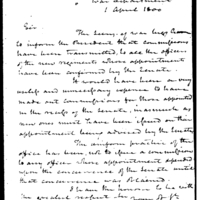
Reports that commissions have been sent to all the officers who have been approved by the Senate. Says it would have been useless to write out or send commissions for men appointed during the Congressional recess, as new ones would have needed to be produced once Senatorial approval was granted. States that the War Department's policy is to not issue commissions for positions which require the concurrence of the Senate until that concurrence has been noted.
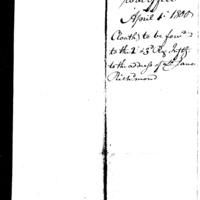
Request to deliver to John Wilkins complete sets of clothing for the Second and Third Regiments of infantry to be transported to Bennington to the address of James Richmond.
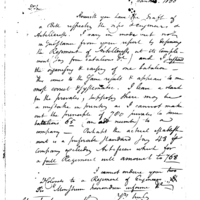
$1000 in post notes on account of the Armory has been received which closes the amount of the estimate of expenditures for February. The mode of remitting a proportion of large and small bills is accomodating to Williams because of the difficulty of procuring silver for notes larger than one hundred dollars. The cutlasses are suitable for ships of war but they are destitute of scabbards.
Miller notes that requiring certain persons to come and sign receipts is an inconvenience. He asks whether clerks may sign receipts and whether this will be considered a sufficient voucher.