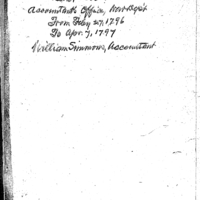
Cited in Hagner to Triplett 07/07/1796.
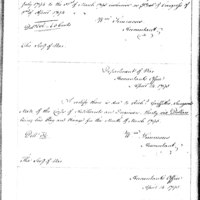
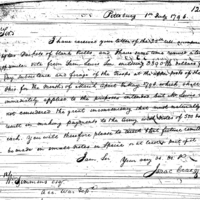
[Triplett's muster and pay roll and his receipt roll received and examined. Notifies Triplett that he will receive the amount of his pay roll from Edward Carrington.]
Acknowledges receipt of Carrington's letter with a receipt for the pay of James Triplett and his men which Simmons will place to Carrington's credit on the War Department account books
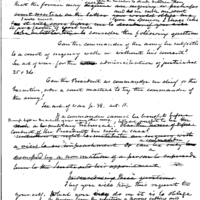
McHenry requested Wayne refrain from purchasing cavalry horses citing the transportation of provisions belongs to the contractor and is not an expense of the United States.
William K. Blue, late a lieutenant in the Cavalry of the United States, must pay Samuel Meredith, Treasurer of the United States, $360 being the amount placed in his hands for the recruiting service
Executive does not have the power to appoint a minister. Additionally controversy and mischief surround current U.S. representative, Monroe. Believe that the current minister should be recalled from Paris and a new person should be appointed. Suggested names of possible new candidates, details on each. Included private letter from Monroe, confiscated, that elucidates his political opinions and conduct. C. Cotesworth Pinckney was chosen as Monroe's successor.
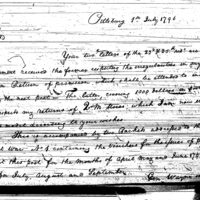
Irregularities in general return submitted by Craig will be attended to, noted shipments of goods via barge. Noted General Wayne's astonishment in the lack of Indian goods at "this post" (possibly Fort Pitt).
Dacosta inquires about the trunions that were to be forwarded by Mr. King. They are urgently needed since the furnace is currently in blast mode ready to proceed with casting the guns. The moulding-board should arrive soon.
In addition to enclosing the account of public stores furnished Ensign David Thompson, an examination by Langham of copies of returns has revealed a degree of neglect in their preparation. Therefore, it will be necessary to prepare a new general return showing the various alterations that have taken place since the last general return.
Notification of receipt of blank rolls and letter from S. Lewis containing money for pay, forage, and subsistence. Craig noted that the money arrived in large bills making it difficult to pay troops and requested smaller bills in the future.