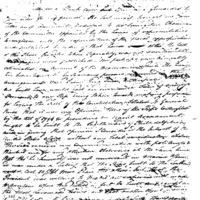
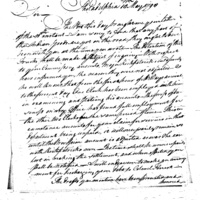
Truxtun discusses frigate construction with McHenry. He anticipated that the costs of the three frigates would be immense. Notes that he advised against building of naval armament to the southward of Philadelphia. Secretary Knox indicated that he believed that ships built to the southward would cost 25 percent more, but President Washington was willing to experiment in order to ascertain where ships could be built under most favorable terms. President also wanted to distribute money generally throughout the union. Goes on to say that Baltimore was not a good place for ship building. He had no choice of artificers, and laborers were scarce and indolent; prices too high. The master builder [Stodder], intended to make the most of the job by dragging it out, and declared he would never build another frigate. Truxtun proposed an alteration in authority, to no avail. Says that he saved the United States money, and never derived any advantage from ship building. Truxtun notes that he was not hesitant to challenge the agents in matters of accounts. Speaks highly of Sterrett; less so about Stodder. Truxtun denies mishandling public monies; claims that David Stodder owes money to the United States.
Hamilton was appalled with the supporters of France residing in the United States and asked Washington to use his influence to change opinions in Virginia and North Carolina. Mentioned duty to his country and responsibilities of office.
Enclosed are Dayton's receipts for eight dollars bounty paid for the week along with accounts for his subsistence and pay. He would like the money transmitted to him as soon as it's convenient.
The ten tons of powder have been purchased. Wolcott regrets that McHenry deems it necessary to notify Mr. Fleming if there are delays in the delivery of casks.
Certification that $515.22 is due Lieutenant Ferdinand L. Claiborne and the detachment under his command at Richmond Virginia, being his and their pay for February and March 1798.
Harris is directed to deliver seven yards of cloth, such as that used for covering cushions for the barge, to Captain John Barry for the frigate "United States."
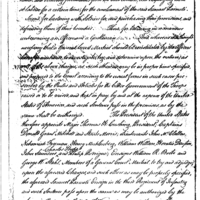
General instructions to commanders of armed vessels in the service of the United States in order to protect United States trade on the coast. Urges them to defend selves with all necessary force against attacks on the high seas, but orders that they not make prize of the ship that attacked, unless a pirate and not a regularly commissioned ship of war. Also warns that they may run across French armed vessels who had illegally seized American merchant vessels, ordering that they insist upon the delivery of any prisoners onboard.
Harris is asked to deliver to Captain Dale of the ship "Ganges" ten pairs of pistols and 24 muskets with bayonets upon Dale's return of 24 muskets into store.
A mostly illegible letter that mentions an electioneering scheme that will point out someone's political character. It discusses someone who is violent and also refers to General Washington and porcupine.
Major Craig discusses the mounting of howitzers on galleys with Samuel Hodgdon. Craig also informs that the first gally will be launched the next day.
Contains letter from Dudley Woodbridge - April 28th 1797 - about confusion surrounding payment for the transportation of goods to Philadelphia via Pittsburg. He includes a certified copy for Hodgdon.
Caperton received letter appointing him as Captain of company of riflemen. He wrote to President informing that he would not accept. Notes that, since he never intended to re enter the service, he did not follow up regarding cash payment given to Lieutenant Bowyer for recruiting. Says the money never came to his hands.
Wolcott informs McHenry of the amounts of cannon gun powder he has purchased through the agency of John Delafield and William Kenyon in addition to fine musket gun powder that is now in the magazine at Governors Island under the care of Captain Frye. McHenry is asked to provide an agent from his department to receive the powder on behalf of the public.
Hodgdon perplexed that Indian goods had not arrived at Pittsburgh, Hodgdon will make an inquiry into the "trucks" transportation. Kirkpatrick's commissary accounts are in discrepancy with War Departments records which is the reason for Craig being unpaid for his work with Kirkpatrick's department. Hodgdon will make an attempt to discharge Craig's debts with Col. Forrest. Enclosed accounts that were supposed to be taken by D. Fisher.