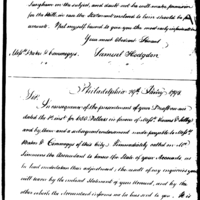
Enclosed inlistments, including Richard Proctor No. 19 and Thomas Smith No. 20. Receipt rolls for bounty paid inclosed, request for credit to Tousard's account.
Truxtun notified McHenry that he would accompany merchant ships providing safe passage against French pirates followed immediately by his departure to the assigned location for patrol.
Truxtun had purchased a small quantity of slops just before a shipment of them arrived from Philadelphia. The extra have been placed under the care of Mr. Pennock where they can supply other ships. Truxtun has also left extra lanterns with Pennock. The ventilators have not arrived. The ship Constellation has too deep a draught to go into southern ports without removing guns. The ship lost one of its anchors the day before, one which Truxtun apparently found inadequate.
Writes that a ship that he was onboard heading out of Lisbon was fired upon by a Spanish gunboat. Describes travels through Spain and happily reports that the Spanish have surrendered posts in accordance to Pinckney's Treaty.
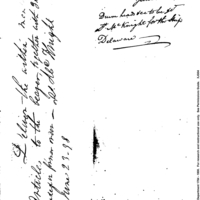
Harris is asked to deliver four drum heads, one drum cord, one drum carriage, and one pair of drum sticks to Lieutenant McKnight of the United States Ship of War "Delaware."
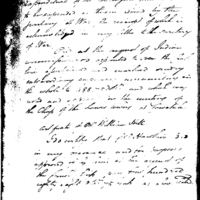
Expenditure of contingent funds of $500 authorized by Secretary of War, receipt of which is acknowledged in Hawkins' letter to Secretary of War.
Certification of payment of funds $488 by Benjamin Hawkins at the request of Indian commissioners for "sundry extraordinary expenses" for united of Chiefs of Lower Towns at Cowetah Georgia.
Certificate of William Hill.
Aaron Dunham encloses copy of letter to War Department which stands as authority for incurring charges; and receipt of Mr McCollum special messenger who conveyed cash to Mrs. Pike.
Freeman returned from Charleston and received money from cashier of branch bank for pay of militia. Matters regarding the payment of officers as advised by the Attorney General and the Secretary of War discussed.
Hodgdon recommends a survey of the public buildings at Carlisle by professional men and an estimate of the cost of repairing the buildings that need it.
Follow up on letters enclosed to McHenry. One of which was responding to Mr. John Parker, who offered to compile all the journals of Congress from its "dawn until the present day."
Hawkins responds to allegations made by Seaborne Jones, that he is partial to the Indians in Georgia. He says that the Commissioners of Georgia and others witnessed his work, and that they sought the opinion of citizens in every county, and that none claimed the diversity of opinion that Jones says has been ignored. He feels that Jones is fabricating his story, and he expects more of a gentleman.