John Laurance, president of Senate responded to Adams address and stated the U.S. gov't concurred with the continuation of defense of seas against French-sanctioned privateers and capture of British goods.
Sugar and coffee and other merchandise are costly to the purchaser in Knoxville. Therefore, Wright asks that a small quantity of these articles be sent with Colonel Henley's wagoner. He will pay for them, including freight, upon their arrival.
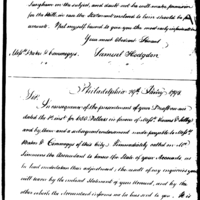
In letter to Hodgdon, Lt. Many laments having to pay passage. Document from Hodgdon indicates payment to German for passage of Many and of detachment of troops under Lieutenant Many consisting of 41 privates and subalterns in ship South Carolina from Philadelphia to Charleston South Carolina.
Receipt of Major Lewis Tousard of $200 for compensation and expenses from Philadelphia to New Port Rhode Island to inspect fortifications and laying down the plans.
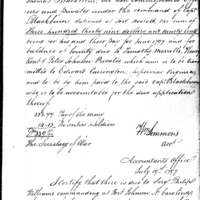
Certification of payments; Tobias Lear, Secretary to Commander in Chief, Lieutenant General George Washington, the sum of $359.28, being for his pay and subsistence and forage from the 1st of September, the date of his appointment, to 30 November, 1798.
Cover for receipts from Lieut. Nehemiah Freeman, Captain John Henry, Lieut. P. Rodrigue, Ensign William R. Boote, and George Fleming in the amounts listed.
The enclosed estimates for the pay of the militia have been authorized. Mr. Henley will be directed to draw upon the Secretary of War for the necessary sums.
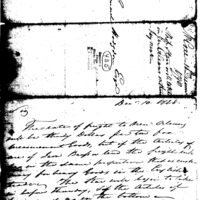
Coxe discusses the cost of freight to ship goods to New Orleans. He notes that iron, brass, and lead shipments will entail a steeper cost and will be loaded in the bottom of the boat.