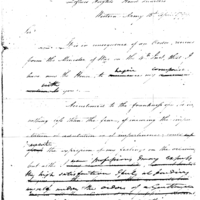
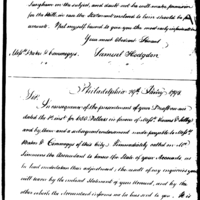
Writes that he understands that his troops stationed in Portland have been authorized to receive a greater quantity of clothing than what is annually allowed to them by law. Reiterates the absolute necessity for tents - states that "our Blockhouse or Barrack is more like a loathsome prison than a wholesome habitation." Insists that conditions must improve in order to prevent "contagious disorder".
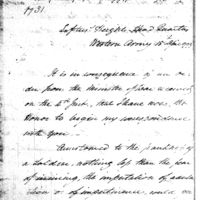
General Wilkinson reports on the situation of the Western Army and the necesssity of erecting a cordon of posts to protect the national boundary which is constantly threatened by Indians and foreign powers.
Hamilton quotes a letter from General Washington who complains that the officers of Virginia has yet to receive their commissions and this is the cause of much dissatisfaction.
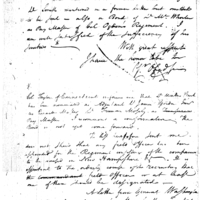
Tracy recommends certain officers for commission and assures McHenry that the Northampton insurgents (those who participated in Shays' Rebellion) do not have the capacity to start another insurrection.
Letter, informs re motives to occupy post; discusses foreign encroachment on national boundary; discusses foreign affairs; mentions robbery in territory; alludes to Indian hostility & aggression; mentions White encroachment; describes frontier and pioneer life; mentions Baton Rouge. Likely, though not confirmed recipient is Hamilton.
In this Circular to the Commandants of Regiments, Hamilton tells the commanders that it is their decision in selecting the most economical means of distrubuting clothing to their regiments but the rendezvous of each district seems the best venue for equipping the recruting service.
Reports store and order of knapsacks and canteens. Does not want to order more than is needed because they become damaged and useless if they lie in store too long. Believes that good quality canteens can be purchased for a fair price in Boston.
Has examined plans for army duty reconfiguration. Requests information about how the parts apply to the whole, particularly pay, provisions, clothing, and stores. The Purveyor is to procure all supplies not immediately contracted for by department heads, and will require assistants. Outlines chain of command among deputies, the superintendent, and storekeepers. Requires precision at all times. The Quartermaster and Inspector General should maintain power over the Purveyor. Outlines chain of command to guard use and prevent abuse of stores. Proposes that as a superintendent he will have a real, not nominal, responsibility.
Certification of payments; $434.63 pay to detachment of Artillerists and Engineers stationed at Fort Wolcot, Rhode Island under command of Major Lewis Tousard.
Certification of payments; Peter Morgert, $10 reward for apprehending William Leabrook, deserter under Ensign George R. Chase, 1st Regiment, payable to Hugh Barclay.
Appears to state that Mr. Foncin, the superintendent engineer for Fort McHenry, will be paid out of government funds; says that no additional federal money can be allocated directly for the defense of Baltimore, but that the Baltimore Committee can and should submit vouchers for reimbursement of monies not adequately anticipated in Major Tousard's initial estimate.
Hawkins outlines the negotiations between Hawkins and the Creeks. Hawkins proposes that the chiefs elect two representative chiefs and ten hunters and guides for each to accompany Hawkins to Pensacola. The Indians are unsure of the plan, but agree to cooperate if a certain chief agrees with the plan.
Believes that at this point they are sufficiently informed of the state of things, and that they must bring their complaints to the national council, in order to get justice.