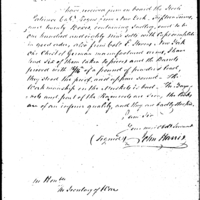
Harris received a shipment of saddles, uniforms, and weaponry. The cannon received held up to a test firing, but the muskets show inferior quality and poor workmanship
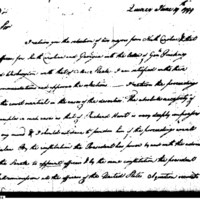
Returns various officer recommendations, with approvals, as well as the report of a court-martial of a deserter. Writes that he believes that strong examples of military discipline are necessary, and implies he will not pardon the man, Richard Hunt. The only remaining question is whether the officers who comprised Hunt's court-martial were allowed to act in that capacity as not all had received their commissions. Regarding McHenry's assertion that he had evidence of those officers who had accepted appointments, and thus commissions were not necessary to allow them to begin their military duties, Adams ponders whether anything other than the president's signature on a commission would hold up as evidence of appointment under the law. Asks that McHenry lay this issue before the department heads [Cabinet] and get their opinions. If the opinion is unanimous that the officers had a right to act as members of the court-martial, Adams will order the execution.
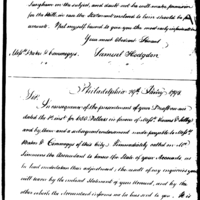
Hamilton stresses the importance of maintaining and submitting accurate returns. He also emphasizes that no money should be paid to a recruit without his undergoing a medical examination.
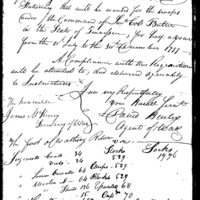
Requests return of every species of stores on hand. Requests monthly returns to know the periodical order of stores. Reports arrival of muskets in New York from England--needs to know who received them and who is keeping them.
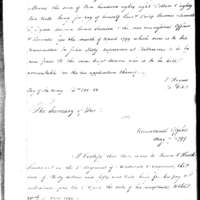
Certification of payment; $6.53 to Sergeant Joseph Grant, under command of Captain Joseph Swearingers Company of Maryland Militia called into service to suppress an insurrection in the Western Counties of Pennsylvania 1794, for additional pay.
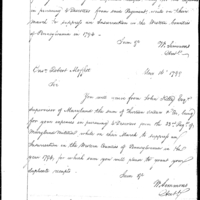
Simmons authorizes Jackson to make payment to William Smith for supplying wood. Simmons also informs Jackson that Lt. Leonard Williams' receipt was received.