McHenry asks for Hamilton's opinion as to the regulations respecting fuel, straw, stationery, and horses furnished to officers. He believes that the number of horses allotted to each grade should be regulated because certain officers might have as many as six horses and feel entitled to public forage for all of them.
Ogden lists the variables causing the uneven results in the recruiting effort in his sector, including the talent and zeal of the recruiting officers, the disposition of the local inhabitants toward the government, and the shortage of officers caused by vacancies and illness.
Rice recommends Sommerset as the most eligible spot for a regimental rendezvous. He estimates that one hundred recruits have been engaged but laments the shortage of officers. His quartermaster will apply for arms, clothing, and tents.
Enclosed is an exact account of the state of the clothing for the current year excluding what is made in other places. No pains will be spared to complete the work undertaken.
John Sutton has been employed in cutting musket stocks and Wolbert contends that it would be an act of charity to continue to employ him. He is a discerning and industrious man and has a large family. He and his friend Clay should be told where to apply for a contract to supply a certain amount of stocks.
Comments on the tone of a letter from Col. Smith, between an officer and a private. Requests that the President decide to recall the appointment to Fowler and award Fonda instead.
Routine correspondence concerning the appointment, transfer, promotion, discharge, desertion, leave, and assignment of individual officers and soldiers.
Routine correspondence concerning the appointment, transfer, promotion, discharge, desertion, leave, and assignment of individual officers and soldiers.
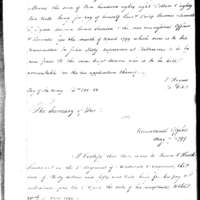
Certification of payment; $30 to Doctor John Jones for attending sundry sick soldiers under command of Captain John Henry while stationed at Spring House Tavern on the expedition against insurgents, Northampton County 1799.