Encloses "a map of river Miami, also a plan of the fort of the same name." States: "My health is I hope perfectly restored and as the fever has left me I trust soon to recover my usual strength." States that he is willing to remain at Niagara throughout the winter. Maintains that "a public vessel on this lake...would I am sure prove economical in the end."
Reports efforts of Mr. Annely to pay landlord John Taylor with stoppages from his wages, but the notes remained unpaid. Asks Mackey to make a payment plan with Annely. Reports that Taylor has acted like a gentleman. Hopes that the canal is progressing. Relays plans for extensive, expensive operation, having purchased land near the Schuylkill for a laboratory, magazine, barracks, workshop, and arsenal. Reports that Philadelphia is remarkably healthy.
Reports that the bayonet scabbards under Baren Steubens have not been used for a long time. Discusses the care for such scabbards. Wonders if appearance is important. Describes the latest cartouche boxes. Asks Stevens to consult with General Hamilton and try to correct his opinion.
Has made great effort to make full estimate of contemplated building construction. Reports that it will take more time than anticipated, and the lateness of the season and destitute state of laboratory stores suggest first building a laboratory and arsenal. Suggests building in brick and stone. Waits for his order to commence labor.
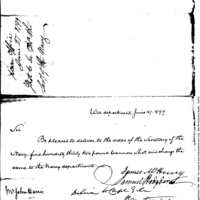
Certification of payment; $552.60 due to detachment 2d Regiment Artillerists and Engineers stationed at Fort Mifflin, Pennsylvania under command of Captain Walter L. Cochran.
Certification of payment; pay to troops stationed at Fort Oswego, New York under command of Lieutenant Nanning J. Vischer. There are two different amounts given.
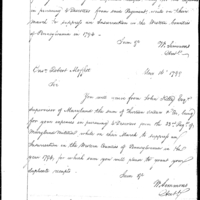
Certification of payment; $18.29 to John Scull, Printer for publishing in the Pittsburg Gazette, a law of the United States for the relief of the refugees from the British provinces of Nova Scotia, Canada agreeable to a letter from the Secretary of War.
Simmons refers the claim made by Elisha Hall to the Secretary at War for guidance. Hall was the secretary to the commissioners appointed to treat with the Cherokees in 1798.
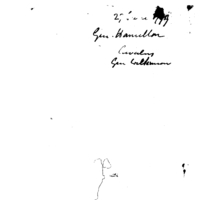
Refers to General [James] Wilkinson's claims to promotion and his own promise not to oppose, but warns of the danger of half-confidences. Concerned about expectations from Spain. Requests that Hamilton not say anything to him about this discussion.
McHenry approves the creation of a troop of horse as a model to ascertain the improvements needed in cavalry tactics. He affirms that Wilkinson's promotion should first be approved by General Washington and, most importantly, Wilkinson's commercial pursuits with Spain must be dissolved before he can gain the confidence required for a promotion.
Referring to Hamilton's order to Contractors to provide fresh meat to the military five days of every week, McHenry notes that no such requirement exists in the law and that the nature of the rations issued should be left to the discretion of commanding officers with the understanding that the law prohibits unwholesome provisions for the soldiers.