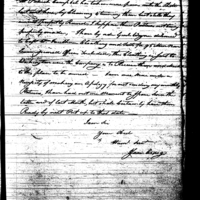
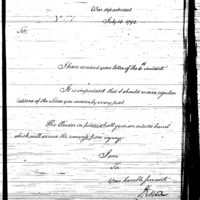
Knox approves Wayne's plan to separate troops who have not had smallpox from those who have had it and to innoculate those who have not had the disorder during the coming winter. He discusses in detail the progress in the movement of various forces to Pittsburgh and addresses the problem of faulty saddles. The division of officers into four Sub-Legions has been arranged and it is hoped that peace negotiations with the hostile Indians will be successful.
Letter, discusses potential misappropriation of cavalry horses: one for the aide de camp, one for a servant. Knox is apt to think this is a mistake, and asks that the horses be returned to the troop. Cavalry horses must be cherished and sacredly appropriated to the service for which they are designed.
The Comptroller of the Currency writes that compensation for jurors of the clerks of the circuit court traveling and issuing certificates for pensions for invalids is fully provided for by a section of "an act for regulating groups in the courts of the United States and providing compensation for the officers of the first courts."
Sargent believes that a number of tribes located about the Lakes and the Illinois might be separated from those at war if properly approached. The Indians fear Mayet so he should be attached to the cause of the United States or else the rascal will decidedly oppose it. Sargent has petitioned Hamilton for compensation but has received no response.
Secretary Knox discusses the protection of Kentucky; Indian warfare; and peace with Indians. Also mentions the militia; directs halt on aggression towards Indians; and discusses pay and rations of rangers. Relates the government policy of justness with Indians, its moderate and humane views, and desire for conclusion of a peace upon proper terms
Letter, discusses recruiting, directs march to Pittsburgh. Captain Mills will muster and inspect Rodgers' recruits. Apply to Mr. Bray for wagon and transport. Inform Knox at every opportunity while on the march.
Knox informs Shelby that the United States intends to negotiate with the Indians for a treaty of peace and requests that Shelby issue orders to prevent the Kentucky Militia from raiding the Indian country, but if peace fails he informs Shelby that the President expects the Kentucky Militia to aid the U.S. Army in any campaign.
Reed laments that from the fate of 4 November 1791 [St Clair defeat], he has lost his clothing and was wounded. He is in a strange country, with no settlements and no friends to help. Mr Hunt has given some assistance. Reed asks for money. He is at a loss whether the drafts given him will exceed the pay due for his service while in the levies.
Putnam explains the situation with the sundry western tribes, the necessity of protecting frontier inhabitants, and the possible intervention of the British in support of the Indians. If the British intend to support the Indians, they should be confronted by the United States on Lake Erie.
Knox discusses his hope that the Creek Nation will abstain from acts of retaliation against murderous frontier whites if the Indians can be convinced of the friendship of the United States.
Judge Advocate John Wade on behalf of Brigadier General Wilkerson informs Sharp that he has been charged with contempt of commanding general's orders and will stand before court martial following day.
Swan reports that he has made advances to the officers of the 1st Regiment but issued no pay to the men. Reports that the 2nd Regiment has been paid. Reports he has 30,000 dollars on hand.
Order and receipt for $12 to be paid to Captain Pratt as advanced pay for work on the recruiting service, that amount to be deducted from Allyn's wages.