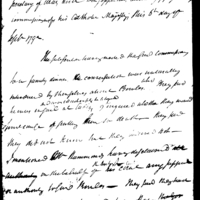
When finding public loads on the road, note the driver name, place seen, and contents of load. Report back to Hodgdon. Payment of $24. Apply to Major Craig for further sums if necessary.
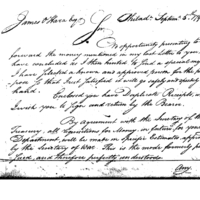
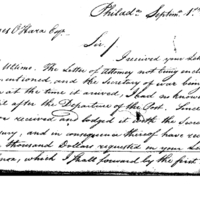
The Commissary of Military Stores has found a special messenger to forward money. Asks the Quartermaster General for a signature of duplicate receipts. Explains procedures for future requisitions of money. Supplies for army have generally gone forward.
Reverend McClure writes Secretary Knox on Arthur St. Clair's campaign. Discusses Indian warfare and frontier and pioneer life. The southern people today experience what the first settlers of New England felt, writes McClure. The foundations of all empires are laid in blood. Suggests that difficulties with Indians will prevent too extensive an immigration over the Western Territory, which if unchecked, could result in some to "lose the habits of subordination in society". He is worried that the frontiersmen will not have the "restraints of law and government" and will "adopt the habits of savages." Also mentions his brother James who lost a leg in the war, and who died in Dublin; he was master of a ship from Exeter.
McClure reflects on some of the effects of the Indian War, including the effect on emigration to the Western Territory. He worries that the pace of settlement will be faster than the transmission of civilized culture.
Requests opinion on conveying intelligence on movement of Creeks. Hopes to communicate movement of Spaniards soon. Mentioned gun promised to Notewego by J. Thompson.
Attempts to persuade Blount that the Spaniards are behind Creek hostilities and murder against white settlers, and that the peaceful towns will "do their part" in keeping the peace. Thompson asked on behalf of peaceful Indians if it is safe to remain in their towns for fear of attacks from white settlers. Requests letter be burned after it is received.
Notified Blount that five towns on the Big River plan to make war against U.S. and their hostility is not the sentiment of the whole Nation. Spaniards provided ammunition to Indians and blames Spaniards for war, not Indians. Little Turkey promised friendly relations with U.S. and will keep U.S. informed of all Indian activity.
Received instructions on disposal of clothing. Sent a number of vouchers for disbursement, together with abstract. Asks that they be examined and returned after correcting any errors.
The business of the Department still remains with John Harris, Keeper of Military Stores. No one has come forward to relieve and take charge of stores. Quartermaster General James O'Hara's boats have arrived. Discusses General Wilkinson and efforts to make excursion up the great Miami to root out Indian camps. Cavalry and Pack horses stolen by Indians. General Putnam left for Fort Knox; expects to hold treaty with Wabash. Hopes that expectations are not fruitless.
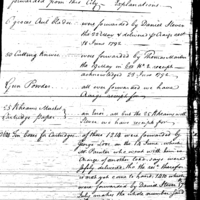
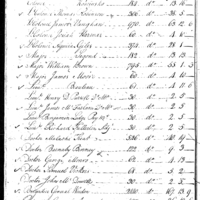
The Commissary of Military Stores encloses Major Isaac Craig's invoice of military and Quarter Master stores to Secretary Knox. The invoice was said to be missing. Supplies include cutting knives, gun powder, cartridges, muskets, writing paper, stationary, and other military provisions.
Discussion on vouchers and monies drawn. All calls for monies must be very explicit and accurate. Hodgdon also wishes for end to the War. Mentions Thomas Martin's wagon, which has set off for Pittsburg and has an excellent barrel of sugar on board.
Hodgdon notes that he is happy to state that no censure is due to any involved in preparing or transporting public stores. Stever alone was tardy, and he will be refused any further employment by way of punishment.
The Commissary of Military Stores will forward the Quartermaster General $10,000, as requested to Knox. Alexander Hamilton wished to draw as little specie as will possibly answer. Will send some amounts in gold, another in bank notes. Will conduct business with O'Hara as he did with Colonel Pickering when the latter was Quartermaster General.
It is assuredly most wise to begin laying up forage and provisions and salting meat in preparation for the coming winter. Without further intelligence, it does not seem prudent to begin an expedition against the Indians at Sandusky.The fine grained powder that Wayne insisted upon has been sent and he is urged to finish paying the amount owed to the troops through August 1st. Recruiting continues to be a problem.