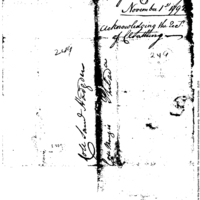
Letter from a Frenchman to Secretary Knox, regarding relations between the United States and France. Talks of their common "love of liberty." Predicts that "America shall become that glorious part of the globe that nature intended her to be."
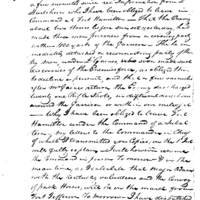
Discusses actions around Fort Hamilton -- Lt. Hartshorn left in command there, 3 men from the garrison captured by "the enemy" [presumably Indians], failed pursuit, etc. Defends his leaving a subaltern in command there because of his own absence without giving a reason for it; discusses movements of latest supply train and reinforcements. Writes that "I dare not in prudence move upon the main roads."
Knox provides Hamilton with a detailed assessment of the provisioning needs of all the posts on the frontier. Posts such as Fort Knox and Fort Franklin will be isolated during the winter and therefore will need additional stores. Advanced posts Forts Jefferson and St. Clair will also need additional provisioning.
Craig notes that, following a general order, he inspected the clothing. Several of the woolen overalls were found to be inferior. A further inspection of the stores has led to 424 pairs of overalls being rejected.
Wayne discusses his many logistical needs, especially the need for pack horses. The need for grain is acute, complicated by the fact that the river is too low to be used for the transport of supplies.
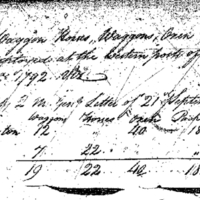
Encloses a return of horses, oxen, and wagon, which he believes will set to rest any concerns about extravagance. There are five teams currently working to supply fuel to the camp and garrison, and even those are not sufficient so that O'Hara has hired additional help on occasion. Pack horses needed to fulfill orders of the Commander in Chief for delivering forage to forts. The only way to transport forage without extra horses would be if the weather allowed for carts or sleds. There is not enough time for him to enclose a list of expenditures, sends a general statement instead.
Knox is advising Wayne as to the most efficient ways to prepare for the winter with particular emphasis on the provisioning and hutting of the troops at all the garrisons. He has the idea that if the cattle can be trained to carry the flour, this would save the money it would cost to provide some other form of transportation.
Colesworthy reports arriving at his native Boston. He finds his connections and friends in good health. He wishes joy at the arrival of Captain Hodgdon in Philadelphia. Mentions that a poor woman wants to be paid for boarding Captain Phelan. There are other demands against Phelan.
Wolcott warns that it is erroneous to assume that a soldier who enlisted in January 1780 is entitled to depreciation on his pay under an enlistment of twelve months made in January 1778.
According to the Commissary of Military Stores, Secretary Hamilton admits only $2500 to be forwarded in specie; the remainder in bank notes. Mentions silver part of remittance and subsequent moiety of notes. Horse supplies will be loaded next week.