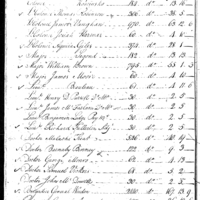
From Quartermaster General's Dept. and Commissary of Military Stores Dept. Account Book. Estimate for monies wanted in the Department of Military Stores
This is Governor Telfair's proclmation in which he declares that the murder of a friendly Indian is to be considered by the laws of Georgia the same as the murder of a white person and the offenders are to be punished according to this principle.
Telfair discusses the steps he has taken to bring to justice the offenders who murdered friendly Cherokees. He warns Knox that if the endeavors to preserve the peace are not successful, the federal government must provide the additional resources needed to defend against marauding Indians.
Hodgdon has been directed not to ship the rum ordered for St. Marys for the use of the Indian Department. Mr. Seagrove, the superintendent, will be supplied with that article in Savannah in Georgia. The Secretary of War wants to be supplied with the contract for boats and horses made previous to Hodgdon's setting out for Pittsburgh in 1791.
Clothing received but vouchers are inaccurate and therefore all packages must be inventoried before Wilkinson knows if they received the proper number.
Reports his situation -- he has recently gained knowledge of the size and population of all the nearby Omee River Indian villages and the location of British agents among the Indians; notes the open support of Indians by the British, who have supplied arms & ammunition. Estimates Indian strength at 1200-1500 warriors; ranged against his own regulars and Kentucky mounted volunteers, Wilkinson feels confident that he can crush the Indians. Details a plan to scare the Indians out of their homes with a quick move by his cavalry, then seize their stores with his infantry. Surmises that the Indian confederacy grows daily. Reports confusion in his supplies, and no knowledge of whether they are sufficient. Reports discontent among his officers for lack of pay, and recommends a pension for the family of a Col. Hardin, who has been murdered [by Shawnee Indians]. Discusses enemy movements, dragoon horses, and the reinforcement of his garrisons.
Deputy Quartermaster General Belli lists the amounts transmitted to sundry contractors and laments the shortage of funds which makes it difficult even to buy pack horses.
Knox warns that that it would be improper to build new posts during treaty negotiations, but if the peace talks fail, the posts should be built during the winter or in the early spring. He talks again of having cattle carry provisions as a way of saving money. When the Wabash chiefs arrive, every effort must be made to make them comfortable.
Mentions preparations for winter quarters at Log Town; furnished with necessary implements and material for building; party of artificers followed. Mr. Campbell had a man cleaning the shot that was sent to the fort.
Wayne explains in detail his reasons for ordering large quantities of supplies well in advance of his needs. Despite misgivings, he will countermand his orders in deference to the wishes of the Secretaries of War and Treasury.
Asks for information regarding General Chapin appointment, since he was employed by Knox in some transactions with Six Nations of Indians and has not been appointed with advice and consent of Senate.
Read and Findley's accounts will be duly attended to, but part of subsequent settlement. Was glad to hear troops had gone forward. Pays respects to Mrs. Craig, to General Nevil and family, and all friends.
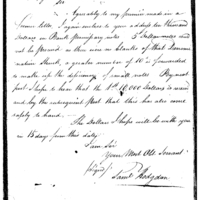
The Commissary of Military Stores sends the Quartermaster General $10,000 in bank notes. Describes denominations and hopes to hear acknowledgment of receipt.
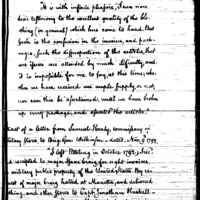
Having looked over the debates in Congress the previous day as detailed in Hodgdon's paper, Hodgdon was surprised to find a statement by Mr. Steele that Mr. Hodgdon complained of not being present at the committee session. Yet he had been written to and the committee had received letters from him relative to the circumstances discussed in the debate.