John Stagg reports that the late General Richard Butler, [second in command, killed during St. Clair expedition, 4 November 1791] was authorized to make appraisement of the rifles which were private property and used in public service.
Order from War Office to deliver to Lieutenant Reed for Captain Zebulon Pike's Company at Trenton, sixty pairs of woolen [illegible], and [illegible] drum heads.
Knox provides Bount with his assessment of the situation with the southern Indians and projected additions to the miitary establishment in the South. The Indians are not satisfied with the actions of the Cumberland settlements but it appears that the Creek chiefs are willing to council with Seagrove soon. Blount is asked to take whatever action is needed to end conflict with the Chickamaugas.
"The said tract shall extend from the mouth of the Miami to the mouth of the Little Miami and be founded by the river Ohio on the South...that the President reserves to the U.S. sucn lands at or near Fort Washington."
Knox is directed by the President to inform General Sevier that his assessment of the disposition of the Creek Nation is very different from that of the Superintendent of Indians Affairs in the southern region.
"Be so good after the President shall have perused the enclosed letter from General Sevier, to return it as it will be requisite for me to acknowledge its receipt."
Prepared set of forms to establish office of superintendent of Indian affairs. Hopes to establish officer to superintend examination of settlements and public property of the U.S., an indispensable arrangement. Proposes that such an office have equal standing with the Treasury and War Departments.
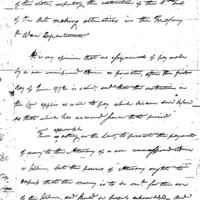
Wolcott gives his opinion that no assignment of pay made by a non-commissioned officer or private after June 1st, 1792 is valid. There is nothing in the law that prevents payments to the attorneys of these soldiers so long as the Power of Attorney states that the money is strictly for the use of the soldier.
Mr. Allison has executed a bond with security for $1500 to be advanced by Hodgdon to him on account of the Quartermaster's department. The Secretary of the Treasury has made out a warrant for this sum in Hodgdon's favor.
Knox warns Wayne not to construct anything that is not absolutely necessary to the comfort of the troops who should be instantly ready to march should the military necessity arise. All steps are being taken to ensure that the necessary stores are available to the Legion and that local citizens are adequately protected so that calling out State militias will not be necessary. Payment of the troops continues to be of concern.
Notification of letter from counties received and taken under advisement by President. Troops to increase in number for protection of frontier. Scouts and rangers to provide intelligence on Indians.
Craig is sorry that Reed's and Finley's accounts did not reach Hodgdon but feels confident that no pains will be necessary to reach a final settlement of all the charges against the Quartermaster General's department during Hodgon's administration.
Wayne is pleased to announce that the waters in the rivers have started to rise due to a profusion of rain and transportation of supplies should be facilitated by this development. He emphasizes the continued need for new clothing for the men who have allowed their current clothing to enter a state of disrepair.
Document, notes on interviews conducted with officers of St. Clair's campaign; describes deficiency of muskets; describes inferior quality of clothing and equipage.
After his meeting with eighteen Creek chiefs, Seagrove confirms that the Creeks have no interest in joining the northern tribes against the forces of the United States.
Although the Western Indians have stated that they wish to attend a council in the Spring, Chapin reveals that the British agent is skeptical that a lasting peace can be achieved under the present circumstances.