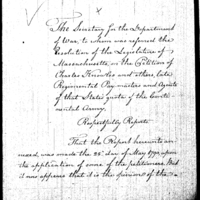
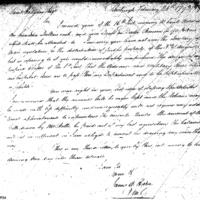
Secretary Knox addresses the U.S. Senate regarding the petition of Charles Knowles, and others, late Regimental Paymasters, and agents of Massachusetts quota of Continental Army.
In response to a request by the President, the cabinet members provide their opinions on three issues involving a proposed treaty with the Indians, the relinquishment of the right of soil in lands north of the Ohio, and whether such relinquishment is essential to peace.
In response to the request of the President to assess the application to redress the debt to France in an amount equivalent to three million livres, Jefferson, Knox, and Randolph favor providing the whole amount. Hamilton argues that the sum should not exceed $318,000 because of the effect of depreciation.
Letter from James Seagrove, Indian Agent to the Creek Nation, to James Holmes, acting as an assistant among the Creeks, at St. Mary's Georgia. Acknowledges receipt of letter from Flint river. Attends to what Holmes says but not at liberty to do so at the moment. If Red friends think it necessary, Seagrove does not oppose their will. Galphin gives alarm on his arrival. Galphin reports that the Creeks broke up Spanish settlements on Tennessee and Bigby Rivers; made an attack on Fort at Mobilis; Galphin was in on the attack, was wounded in thigh. Indians repulsed with loss of twenty men. Spaniards lost twenty men; about twenty negroes brought off, with large sums of money, with many more such improbable tales. Galphin tells other tales that Seagrove thinks improbable. Seagrove describes Galphin's reports as "young man's fruitful inventive genius." Confirmed as falsehood by Mr Fowler. Seagrove notes that Galphin's attempt to impose on him, shall not be readily forgiven; wishes to get clear of him; a very dangerous person from his falsehoods. Requests that Mr Barnard and Holmes attempt to contradict and expose him villainy to the Creek Nation. Fowler was in town, but cleared out and may be at Colerain. Expresses concern about the influence of the northern tribes with the Creeks. Mentions the Shawnees. Reiterates policy of driving northern Indians away from Creeks or bringing them as prisoner. Policy is to sever the Creeks from the hostile tribes. Seagrove not happy with peace efforts with northern Indians [presumably efforts of peace commissioners Pickering, Lincoln, Randolph with Six Nations]. Seagrove believes the northern tribes should be thrashed first as an example to others. Preparations [presumably by General Wayne] for a summer campaign [in the north] has alarmed the northern tribes. Says that it is useless now to dictate to Bernard or Holmes what to say to the Creek chiefs, but says to leave no stone unturned to overset the Indian purposes. Impossible to meet until 1 May. Hope no bad arises from not being on the spot. Sends bearer Mordecai Light for sake of dispatch by his return. Hopes for agreeable accounts.
Requests money. Refers to the Secretary of War and the distribution of public property and the military and ordnance stores. Requests that Mr. Belli be paid.
The President requests a meeting with the cabinet heads and the Attorney General to discuss the contents of an unidentified note and to lay before them communications received from General Hull respecting relations with the northwestern Indians.
Notification that burned barrels of musket balls to arrive in Charleston. They were burned on the top of the State House. Could never see their figure without sourness. The incident has been the cause of Muller's reduction in salary.
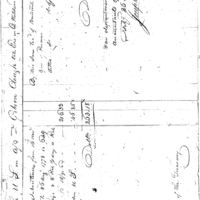
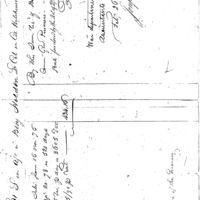
Enclosed is a continuation of the extract from the register of warrants drawn in the War Department and the charges against sundry officers, including expenses related to deserters. Enclosed also is a list of names and sums in order that the same may be charged in their account settlements.
The Cornplanter's presence is no longer required because adequate information has been obtained from other chiefs. The President orders that Fort Jefferson should not be relinquished until there is sufficient information to determine whether such a step would be wise.
Wayne complains about the defective nature of his howitzers and asks for replacements of the same properties and caliber that are of better quality. Postscript includes birthday wishes for President George Washington.