Wayne argues that the treaty deliberations are just an effort on the part of the Indians to procrastinate until the conditions of warfare are in their favor. He laments that most of his companies are much less than full strength and asks for recruits that he knows probably do not exist.
Howell informs Swan that he will receive a continuation of warrants issued and also payrolls of detachments under the command of the following officers: Capt. William Kersey to Capt. Marshall and Capt. Bezaleel Howe; Capt. Kersey to Capt. Zebulon Pike and Capt. John Pratt; Capt. Kersey to Capt. Cornelius Sedam. He advises Swan to settle with Mr. O'Hara before moving down to Fort Washington.
Instructions to Benjamin Lincoln, Beverley Randolph, and Timothy Pickering, Commissioners appointed for treating with the Indians northwest of the Ohio.
"Since writing you of this date, I have received a letter from the Little Turkey of which you have enclosed an extract. Contrary to my expectation, Mr. McKee was the bearer of it. The reason of his return the enclosed report will explain."
Blount has received additional evidence of the intentions of the Creeks to commit hostilities against the United States. McKee and Watts are to attend a council in which McKee is to represent the interests of the U.S. The mounted infantry ordered to provide relief to the Mero Distrct has not demonstrated the readiness that would have been expected.
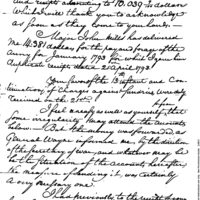
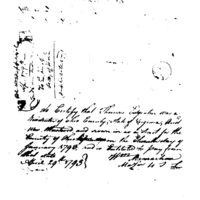
Major John Mills has delivered $14,381 for the pay and forage of the Army for January 1793 for which he received duplicate receipts dated 20 April 1793.
Enclosed are a complete set of muster rolls for September, October, and November 1792 for the companies of the following Captains: Porter, Heth, Sparks, Guion, Hannah, Pike, Stringer, and Faulkner. Also included are a set of musters of the field artillery of the 3rd Sub Legion for the same months.
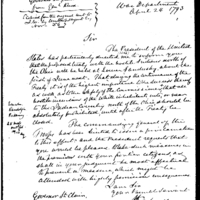
Knox emphasizes that during the treaty talks at lower Sandusky, hostile incursions by white citizens into Indian country should be strictly prohibited so as not to impede the peace process.
Governor of Georgia provides status of Indian hostilities to Secretary at War. Governor Telfair informs Secretary Knox that weapons have not been received.
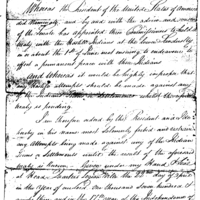
Notes the commissioners chosen by the Senate and the President to hold a treaty with the hostile Indians of the lower Sandusky. Proclamation forbids aggressive action against the Indians or their settlements until the treaty has concluded.
Stagg sends a pattern bayonet for a French musket made by [Joseph] Cranch at West Point. The Secretary of War wants to be informed as to what price one thousand bayonets could be made for. It is understood that the bayonet will be without a scabbard and with a blade of steel.