
Collection
Transcription Project
-
Jefferson vets official correspondance with the Secretaries at War and Treasury
Jefferson solicits the views of the Secretary at War of enclosed draft letters addressed to the French Minister. -
Distilled Spirits to be Issued to Troops
Hamilton has concluded to have purchases of distilled spirits made on the accounts of the government for the use of the army. -
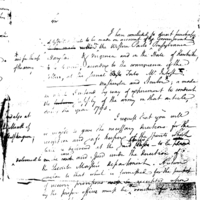
Reception & Safe Keeping of Distilled Spirits
Hamilton asks Knox to give the necessary directions for the reception and safekeeping of the distilled spirits that have been purchased for the use of the Army in the western parts of Pennsylvania, Maryland, Virginia and Kentucky at Forts McIntosh, Washington, and Steuben. -
The Ships "William" and "Snow Suckey"
"Thomas Jefferson has the honor to submit the correction & approbation of the Secretaries of the Treasury & War, the enclosed drafts of letters to the French minister on the subject of the ship 'William' & others in her situation & to Mr. Hammond & Mr. Pinckney on the subject of the 'Snow Suckey.'" -
Letter Citation
Cited in Hoffman to Hodgdon, 06/27/1793. -
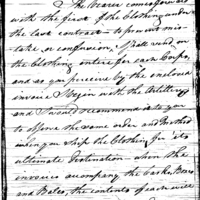
Shipments of Clothing to Commanders of Corps
Discusses contract for clothing. Gives recommendations on how to ship the clothing to its destinations, respective Corps, along with invoices. Wants to avoid packages shipping without knowledge of contents. -
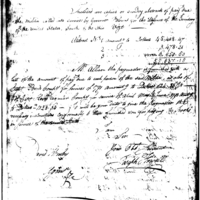
Abstract of Pay Due the Militia Called into Service for the Protection of the Frontiers 1793
Abstract of pay due the militia called into service for the protection of the frontiers South of the Ohio by order of the Governor, William Blount in the year 1793. -
Abstract of Pay Due Militia Southwest of the Ohio 1793
Abstract of pay due the militia called into service for the protection of the frontiers South of the Ohio by order of the Governor, William Blount in the year 1793. -
Pay due sundry militia for services
Abstract pay due sundry militia officers for services in 1793 called into service by Governor William Blount for defense of Territory of United States south of Ohio River. Blount is Governor of Southwest Territory -
Pay due sundry militia officers
Abstract pay due sundry militia officers for services in 1793 called into service by Governor William Blount for defense of Territory of United States south of Ohio River. Blount is Governor of Southwest Territory. Mr. Allison, paymaster, has list of amounts of pay due each person. Howell instructs Henley to give paymaster necessary instructions for paying troops. -
Commitment to Peace with the United States
Dispatch from White Lieutenant or Tuskena Atca, for himself and the Upper Creek Towns, to James Seagrove Creek Indian Agent, interpreted and delivered by Stephen Sullivan. White Lieutenant pledges his commitment to peace with United States and will comply with demands to turn over the perpetrators of robbery and murder at Traders Hill St Marys. Asks for patience and understanding. Reminds Seagrove that whites have committed similar crimes against Indians. Refers to Oconee as the boundary line and asks that whites respect it. Indians will do same, with exception of occasional traders and the like. Asks that Seagrove visit soon. Laments the use of rum to trick Indians to sell their land, property and horses. Indians then proceed to steal horses so they don't remain on foot. Most of Indians are friends to whites. Upper Creeks and Cussetahs have been friendly since the British War. Tell your beloved man [General Washington] that his people are good friends, but can be desperate enemies. Speaks highly of the interpreter Stephen Sullivan. Asks Seagrove to send his horse back with talks, and not empty either. -
Letter Citation
Cited in Simmons to Lewis, 07/05/1793. -
Letter Citation
Cited in Craig to Hodgdon, 07/05/1793. -
Blank Pay Rolls
Swan wants Howell to send him three or four reams of blank payrolls. Otherwise the payrolls must be made on common paper which will be cumbersome and inconveniente and cannot be made to correspond to the common file. -
Britt's Account
Swan observes that if he is not ordered out on the campaign and if [Daniel] Britt shoud return safe from Vincennes, Howell may anticipate receiving a statement of Britt's account and payment by September. Swan does not know how to send on Britt's rolls which have become as voluminous as his own. -
Regarding detention of ship William
Secretary of State Thomas Jefferson writes about the detention of the ship William. Detaining her within the limits of protection. Detention can only be by the military. Takes liberty of submitting whether the governor should take possession of the vessel. Mentions the President is much engaged and it is a plain case and may require immediate interpretation. Document is highly illegible. -
Chiefs Cannot Influence All Parties to Pacific Measures
It appears that the Cherokee head-men are sincere in their desire for peace but they cannot control all the members of their tribe, some of whom are stealing horses and corn which provokes the animosity of the agrieved whites. -
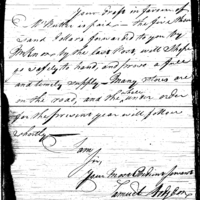
Forwarding of Money; Shipment of Stores
Draft in favor of Mr. Butler paid; $5000 forwarded by last post. Many stores have been shipped. -
Abstract of Charges Against Deserters, Etc.
Enclosed is a continuation of payments made on warrants from the Secretary of War and an abstract of charges against deserters. Also included are two payrolls of the recruits under the command of Captain Sedam and Lieutenant Underhill, now under marching orders. The money for March is ready but when and by whom the General will send it is unknown. -
Orders to Suspend Building of Post
Issues with water depth at Wheeling, Knox suspended the building of a post until he obtained more information on the subject. -
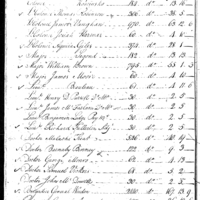
Estimate of expense to transport shot and shell
From Quartermaster General's Dept. and Commissary of Military Stores Dept. Account Book. Estimate of the expenses of bringing the shot and shells from Susquehanna and the Head of Elk to Philadelphia. -
Headmen Want Peace with the United States, Etc.
Barnard reports that headmen of Cussetahs, and headmen of upper and lower Creeks all seem to want peace with United States. Their intent was to make satisfaction for the murders and robbery at Robert Seagrove's store at Trader's Hill on St Marys River, but for the intervention of William Panton. At Tuckabatches, Indians agreed to return stolen horses; Cowetas and Chickasaws refuse to comply. Barnard says he would have been doing more against Panton, but he has been very ill with head pleurisy.He also laments that he has no commission from the United States and thus has no authority with the Spaniards. Barnard is also threatened by Indians. Seagrove promised a commission, but Barnard has heard nothing since November. Barnard laments that he is risking much for his country, with nothing to show for it financially. Says that if the culprit towns could be made to suffer, it would be best means to effect the peace. If white men fall on our friends, the Cussetahs, this would bring on a hot war which the Spaniards would promote to their interests. Surmises that the degree of terror would match that of the Shawanee to the north. Asks Gaither to keep the federal scouts from coming down the Cussetah path, as that is generally a friendly area, with exception of Cowetas who are known to cause mischief. -
Journal of the Commissioners Holding a Treaty at Sandusky
The journal of the Commissioners of the United States, appointed to hold a treaty at Sandusky, for the purpose of making peace with the Western Indians. -
Keeping Up a War with the United States
Fulton attests to the machinations of a number of men, including Governor O' Neal and Mr. Panton, encouraging the Creeks to keep up a war with the United States. The Indians themselves say that they can ravage citizens of the U.S. and still expect to treat with them and receive presents because the citizens are so good-natured. -
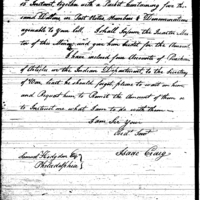
Money and Indian Department accounts
Received money in post notes. Will inform Quarter Master General. Encloses accounts for Indian Department.