
Collection
Transcription Project
-
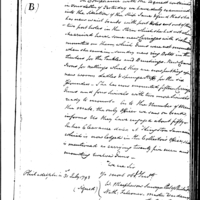
COPY: List of Repairs
Detailed list of repairs made to a merchant ship in port of Philadelphia. -
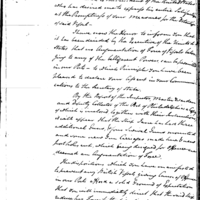
Military Force Authorized
Executive Dept. authorized an augmentation to vessels for increased military support against foreign war ships in U.S. ports. -
Council meeting at Captain Elliot's, with the Commissioners of the United States, the Deputation of Indians and the British Officers and Inhabitants
Council at Captain Elliott's near mouth of Detroit River. Elliott is assistant to Colonel Alexander McKee. Those present were the Federal Commissioners of United States, Benjamin Lincoln, Timothy Pickering and Beverley Randolph, the Deputation of Indians, and British Officers and Inhabitants. Wyandot Chief addressed the commissioners and presented a paper that puts collective thoughts in writing. The writings were translated by Simon Girty, a British Interpreter. The contents of the paper, done at the General Council at the foot of the Miami Rapids, as follows: Begins with a reference to the Treaty at Ft Stanwix and mentions that the boundary between Indians and whites is the Ohio River. If commissioners want peace, they must remove settlers from Indian side of Ohio River. Indians then ask whether commissioners have the authority to make decisions regarding Ohio River as a boundary line. Statement agreed to by the following: Bear, of Wyandots; Turtle of Delawares; Snake of Shawanese; Miamis; Snipe of Mingos; Fish of Pattawatomies; Ottawas; Turkey of Connoys; Chippewas; Munsees. -
Letter Citation
Cited in Knox to Lee, 08/05/1793. -
Governor of Georgia writes to Secretary at War regarding Indian hostilities
Governor Telfair informs Secretary Knox of his intent to keep the President informed of all troop movements. -
Letter Citation
Cited in Knox to Bond, 07/31/1793. -
Further Light on the Conduct of the Cherokees
Further light on the conduct of the Cherokees can be gained by contrasting the letters from General Roertson and Piamingo with the letter from Little Turkey. -
Account of Thomas Henley, Aide-de-Camp
Statement of the account of Thomas Henley, Aide-de-Camp; from Joseph Howell at the War Accountant's Office to the Auditor of the Treasury. -
Account of Nathan Scotton
Certification of service and settlement of pay for Nathan Scotton, late private in Colonel Lee's Legion. -
Provide Answers to Captain George Fleming Queries
Captain George Fleming wants to know cost of carriages made in Philadelphia, for cannon sent from West Point, and what a carpenter would charge of making carriages for eight inch howitzers. Stagg informs Hodgdon that Secretary of War wants Hodgdon to provide the answers. -
Orders to Receive PublicHorses and Equipment
Secretary of War requests that Hodgdon receive from Corporal Gallagher two pulci horse with equipment. Colonel Henley, going to Governor Blount's territory may want of them. -
Letter Citation
Cited in Macpherson, Falconer, and Graff to Knox, 07/31/1793. -
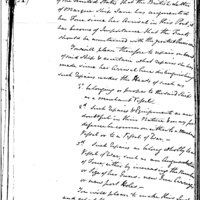
Request for Report on Ship Repairs
Orders to ascertain information on repairs made to British ship now in port of Philadelphia, to determine whether it is being fitted as a merchant vessel or a vessel of war. The ship is identified as a Letter of Marque ship. -
Letter from James Seagrove Indian Agent, to Timothy Bernard on death of David Cornell, death of McGillivray and relations with Spaniards, meeting with Chiefs on 10 September 1793, delinquent pay by government of United States, shortage of supplies, assistance of Mr. Jacob Townsend, on the giving of arms to Indians under present circumstances, and orders to capitalize on the kindness Seagrove has shown the detained Indians
Seagrove believes that the rage over the death of David Cornell will subside. Believes Creek leadership lacks direction since death of Alexander McGillivray. Should capitalize on this opportunity to improve relations; if not, the Spaniards will. Meeting on the Oakmulgee on 10 September 1793 will go as planned; the meeting is based on direction of President of United States General George Washington. Orders Bernard to secure Seagrove's entrance into the Creek nation and provide for his security. Cannot assist Bernard with any money, since Seagrove has not been paid either. Discusses lack of supplies at St Marys. Will provide assistance with goods at Rocklanding. Townsend is useful; he has good relations with the White Lieutenant. Wants to see Kinnards before Panton gets a hold of them. No arms for Indians under present circumstances. -
Letter from James Seagrove Indian Agent, to Kings, Chiefs, of the Cussetah and all other friends of United States in the Lower Creek Towns
From Savannah, James Seagrove addresses the Kings and Chiefs of the Cussetahs and all other friends of United States in lower Creek Towns. Some of those Indians detained at Seagrove's house have since run away. Expresses disappointment that they left. They were well taken care of. The remaining detainees Seagrove sends via Mordecai and Townsend as a demonstration of good faith. Speaks of death of David Cornell. Informs Chiefs of meeting planned for 10 September 1793 at Oakmulgee. This meeting would serve to convince President of United States General George Washington of the peaceful intentions of his dutiful children. Warns chiefs to refrain from mischief in order to keep the Georgia militia from doing harm against them. Prevent the bad people from doing mischief. -
Letter from James Seagrove to the Mad Dog of Tucabachee, Upper Creeks on death of David Cornell and expected meeting 10 September 1793
Seagrove laments the death of mutual friend David Cornell. Promises full satisfaction for his death and pleads for restraint among the Creeks. Informs Mad Dog of expected meeting and asks that he take measures both to attend himself, and to provide for Seagrove's security. Says he has informed President of United States General Washington that Mad Dog is reliable friend. Promises to settle all matters during meeting of 10 September 1793. -
Letter from James Seagrove to Alexander Cornell on the fate of David Cornell, the peaceful intentions of General Washington, and prospects of meeting 10 September 1793
Seagrove asks for Cornell's support in maintaining peace, and prevent rash response following death of mutual friend David Cornell. Stresses the General Washington wishes that Seagrove meet with friendly Creek Chiefs. Anticipated date 10 September 1793. Would have met earlier but for incident at Traders Hill St Marys. Will return to belongings of David Cornell. Asks that Cornell take measures to prevent mischief, otherwise the Georgia militia will take measures to inflict suffering. Asks that Mad Dog and Joseph Cornell attend meeting. -
Letter from James Seagrove to the White Lieutenant of the Oakfuskies on future meeting, prospects for peace, death of David Cornell
Writing from Savannah, Seagrove acknowledges receipt of talks from Mr. Townsend and expresses satisfaction with the peaceful tone. Plans to meet at Oakmulgee 10 September 1793. Notes that it was General Washington who ordered the Georgia militia back from the bad towns in order to give the Creeks time to punish those who committed robbery and murder at Traders Hill St. Marys. Comments on the unfortunate death of David Cornell. Plans to settle misunderstanding over horses. Asks that White Lieutenant take possession of Alexander McGillivray's effects that belonged to the United States. -
Arming, & Equipping of Vessels by Belligerents in American Ports
Jefferson, Randolph, and Hamilton each describe their versions of proposed rules concerning the arming and equipping of vessels by belligerents in American ports. -
Incessant Harassment of the Executive
Washington asks the heads of the department to reconsider the expediency of directing the Custom House officers to be attentive to arming and equipping vessels other than for offensive and defensive purposes. Unless this is done, the excecutive will be incessantly harassed with complaints. -
Account of Edward Kelly
Certification of service and settlement of pay for Edward Kelly, late private in Spencer's Regiment. -
Letter Citation
Cited in O'Hara to Knox, 08/08/1793. -
Orders to March to Frontier
Reiterated orders to march to frontier post of Major General Anthony Wayne so as to accept the command of a cavalry squadron recently vacated by Major Rudolph. -
Notification of the Meeting at Sandusky
Captain Elliot delivered a letter from Colonel McKee in which Mckee informs the Commissioners that he will inform them of the time the Indians will meet at Sandusky as soon as he receives that information. -
Speech of the Wyandot Chief to the Commissioners
In his speech to the Commissioners, the Wyandot Chief admonishes them that they know very well that the boundary line established by the White People at the Treaty of Fort Stanwix was the Ohio River.