
Collection
Transcription Project
-
British Ship claimed as prize
Letter, discusses policy toward the British ship 'Republican' claimed as a prize by the French in the port of New York. -
Proposed Rules Governing Belligerents' Use of American Ports
The cabnet members provide proposed rules governing vessels of the belligerents in the war between Britain and France being armed and equipped in American ports. Privateers or those vessels adapted solely for war are deemed unlawful while those fitted for commerce or for commerce and war are lawful. -
Fitting Out of Privateers in the Ports of the United States.
The cabinet members state their opinion in favor of the prohibition of future fitting out of privateers in the ports of the United States. -
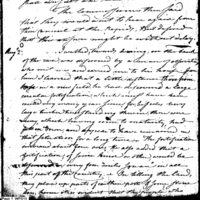
Commissioners Clarifying Misunderstanding
Commissioners announced they would anxiously wait for reply from Council at Rapids of the Miami River. -
Notes Concerning the Conduct of the French Minister
Hamilton cites eleven examples of the improrieties of Citizen Genet while in the United States. -
Arming & Equipping Belligerent Vessels
A list of regulations for the regional arming and equipping of belligerent vessels for military service. -
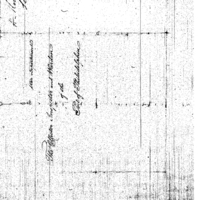
Verification of Reduction in Force
The President has requested that the Collector, Inspector, and Warden board the British ship "Jane" and verify whether the reduction in force nas actually been carried out as specified to the British Consul General. The captain of the ship claims that the additional hands are real British subjects but proof of that statement is required. -
Detained Frigate
Discusses case of prize taken by French Frigate. -
Speech by Wyandot Chief
Translated by Simon Girtie. Chief stated that previous treaties with a few chiefs were void because they did not involve Corn planter and therefore the United States had not purchased Indian lands. -
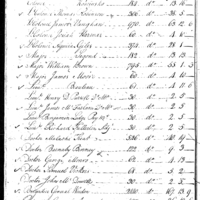
Estimate for Supplies and Services for the Military Stores Department
From Quartermaster General's Dept. and Commissary of Military Stores Dept. Account Book. Estimates for listed supplies and services in the Military Stores Department -
Letter Citation
Cited in Knox to Bond, 08/01/1793. -
Goods Needed Annually for the Chickasaw and Choctaw Indians
"Estimate of goods necessary to be furnished the Chickasaw and Choctaw Indians annually." -
Savages Against Savages
Governor Blount and General Pickens discuss the implications of building a post at the mouth of the Bear Creek which may help to cut off water communication between the northern and southern Indians. They mention the benefits that may incur by enlisting the Chickasaws and Choctaws in the war against the Creeks who might be joined by the Cherokees. -
Notification of Appointment
Henley temporarily appointed Agent for Dept of War in territory south of the Ohio. Information on pay. -
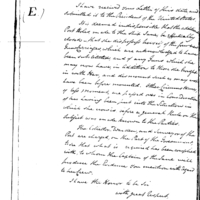
[COPY] Specifications for Removing Guns
Repairs and modifications made to the merchant ship must be removed. Guns and port holes specified. -
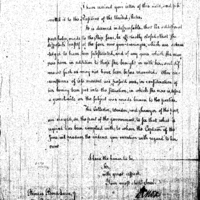
Failure to Mount Additional Guns
Knox deems it indefensible that that the additional post-holes made to the ship "Jane" are effectively closed and that the four new gun-carriages and any new guns which she may have in addition to those she brought with her have not been mounted. -
Cabinet Meeting: What is to be done with Mr. Genet?
The members of the Cabinet agree that a letter should be dispatched to the French government stating the reasons for the recall of Citizen Genet. -
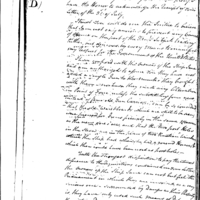
COPY Assurances Regarding British Vessel
Bond replies to Knox's letter of July 31 on behalf of the British Minister. He assures Knox that he respects the US Government, and that the British vessel being investigated by the US is not augmenting its arsenal, merely repairing what it already had. The guns on the ship are to protect the cargo and the ship, not to engage in warfare, and are required by insurance. Further, the master of the ship is willing to present evidence that the crew are all British subjects, none are impressed Americans. -
Expedition Against the Creek Nation
Pickens describes the plans for the expedition against the Creek Nation of Indians with alterations required for including the Cherokees as adversaries. There is concern regarding how to discriminate between enemy and friendly Indians. -
Craig discusses military stores and shipment with Hodgdon
Major Craig acknowledges funds and parcels of clothing received from Hodgdon. Craig also forwards records of his accounts to Hodgdon. -
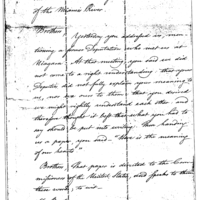
Border Disputes and other issues
Speech to be delivered to the Indians. Referring to the Treaty of Fort Stanwix, the Indians have demanded that all whites be removed from the Indian side of the Ohio as a condition of peace. The U.S. commissioner expresses surprise that the Indians felt they were misunderstood previously, and reiterates a sentiment that the Indians, too, must make concessions; says that each sides' concessions and the fixing of the boundary should be addressed in the face-to-face treaty, but that the Indians have prevented this by staying away from the treaty site. Describes how the Treaty of Fort Stanwix may have been voided by the subsequent treaty ending the Revolutionary War; describes various treaties between the U.S. and different tribes at diverse locations, saying that these gave more land to the U.S., but the tribes became dissatisfied with the existing treaties. States the U.S. commission's willingness to produce documents affirming the Indians' acceptance of the later treaties. Declares that the U.S. cannot remove the white settlers now on the northern side of the Ohio, because land becomes too dear to white people who have improved it. Requests those lands on the northern side of the Ohio as peace concessions from the Indians. Also offers to decide a new boundary line and fiscally compensate the Indians for the land lost (claims this option is an offered U.S. peace concession). Another proposed U.S. concession is the withdrawal of an American claim to the entire southern Great Lakes region, based on the idea that the English king included that area in the American boundaries after the peace, but had no right to do so if the Indians owned it. Asks for the Indians' response. -
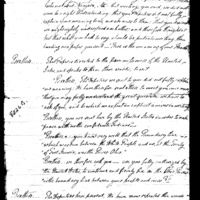
Speech of the Commissioners of the United States
Speech of the Commissioners of the United States to the Deputies of the Confederate Nations assembled at the Rapids of the Miami River. Mention disputes over the boundary lines, along with past treaties. Commissioners of the United States include Benjamin Lincoln, Beverly Randolph, and Timothy Pickering. -
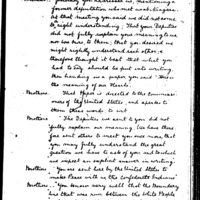
Speech Regarding Possession of Land and Past Treaties with Indian Confederacy
Commissioners agreed the boundary line set at the Treaty of Fort Stanwix between the Indians and the British colonies was the Ohio River, but future treaties ceded tracts of land to the U.S. and therefore they could not remove settlers from the land. -
Letter Citation
"In case of war with the Cherokees as well as the Creeks, General Sevier is a fit character to command that part of the force which be employed against the Cherokees." -
Letter from James Seagrove Creek Indian Agent, to Henry Knox Secretary of War on meetings with Creeks, influence of Alexander McGillivray, Panton's intrigues, the Spaniards, and Georgia Governor Telfair
Seagrove explains to Knox why he has not visited with Creeks. Reasons that a train of circumstances and events rendered such impossible. Notes that McGillivray and his adherents opposed him and his potential influence. Says that his instructions were to avoid disputes with McGillivray; therefore he did not impose himself on the Creeks. When Seagrove did obtain assent from Chiefs, he made arrangements for a meeting while at Colerain. A meeting was fixed for 1 May 1793. Refers to some Creek leadership resentment toward McGillivray regards the Treaty of New York. Surmises that robbery and murder in March 1793 at Traders Hill on St Marys were orchestrated by Panton to sabotage Seagrove's 1 May meeting. This notion corroborated by Burges and Galphin. Since then, Seagrove planned to visit the Creeks, but his plans were disrupted by the death of David Cornell. Seagrove making security arrangements for upcoming meeting. Panton continues to stir up trouble. Does not wish to inform Governor Telfair of his plans to meet with Creeks. Telfair does not recognize Seagrove's status as a public officer, which perhaps explains why he will not acknowledge or answer Seagrove's letters. Plans to release the Indians whom he detained. Reports a rumor that indicates that President of United States is encouraging offensive operations against Creeks. Asks if this is true. Telfair plans to meet with his militia General officers on 8 August 1793.