
Collection
Transcription Project
-
Letter Citation
Cited in Knox to Mifflin, 08/19/1793. -
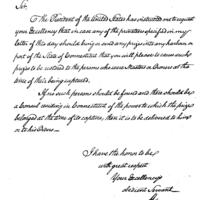
Procedure for Returning Ships Brought as Prizes into U.S. Ports By French Privateers
Referring to the privateers mentioned in the U.S.-French agreement concerning French ships in U.S. ports, Knox directs that any prizes brought by French privateers into Connecticut ports be given back to the command of their sailing masters, or consuls from the ship's country. -
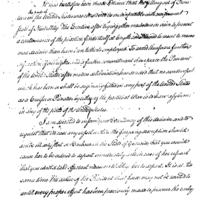
Asylum
Presidential decision not to grant asylum to any armed vessel or privateer. Requests Governor's assistance in enforcing this new mandate. -
Letter Citation
Cited in Knox to Clayton, 08/21/1793; Knox to Clayton, 08/22/1793. -
Arms for Vessels
Describes new rules concerning the fitting and arming of ships by belligerent nations in ports or harbors of the United States. -
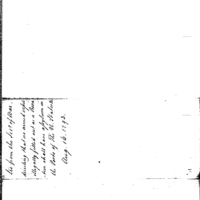
No Armed Vessel Fitted Out as a Privateer Shall Have Asylum in U. S. Ports
Knox warns that no foreign vessel fitted out as a privateer should be allowed in any port of the United States. The militia should be used to enforce this prohibition and prizes taken by said privateers should be returned to their home countries. -
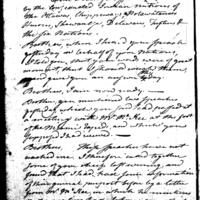
Lord Dorchester speech to Indians
Land rights and boundaries were previously determined by nations of Europe and do not hold now that the United States has possession of the land. -
Payment to Jenkins
Carrington recently enclosed a voucher to Hodgdon for the payment of fifty dollars to one Jenkins for transporting arms to Capt. Preston. Carrington is taking this opportunity to remind Hodgdon again of this obligation. -
Account of Joseph Baker
Certification of service and settlement of pay for Joseph Baker. Baker is owed $13.95. -
Speech to the Chiefs & Warriors of the Indian Nations
Speech to the Chiefs and Warriors of the Indian Nations assembled at the foot of the Rapids of the Miami River respecting how the United States could not make the Ohio River the boundary line between the Indian Nations and the United States. -
No Answer Has Arrived
The Commissioners express their desire for an answer to their speech to the Indian deputation in which they declared that they could not establish the Ohio River as the boundary between Indian territory and the United States. -
No Answer from the Indians Has Arrived
Commissioners Lincoln, Randolph, and Pickering express their disappointment that they have yet to receive an answer from the deputation of Indian Nations in response to the Commissioners' speech at the rapids of the Miami. They request McKee's assistance in prodding the Indians to produce an answer. -
Bill of Lading
Habersham acknowledges receipt of a bill of lading for packages shipped on board the schooner "Friendship", John Patton, Master. -
Prolonged Negotiations with Six Nations
Commissioners enclose copy of speech to Six Nations proposing peace, no reply from Indians. Commissioners fear a closing of negotiations prior to completion of treaty due to prolonged waiting for reply from Indians. -
Letter Citation
Cited in Commissioners to Chiefs and Warriors, 08/16/1793. -
Ownership of Land West of the Ohio River
Official document from Confederacy of Indian Nations. Land ceded by a few chiefs of the Confederacy did not validate the U.S. claims to the land west of the Ohio River. Indians will not sell their lands, instead they tell the U.S. to give the money to the poor settlers so they can move off the land. -
Governor of Georgia writes to Secretary at War regarding Indian hostilities
Governor Telfair forwards a transcription of his council of war to Secretary Knox. The Governor asks to have this document presented to the President. The council of war was held on 8 August 1793. -
On compensation for death of David Cornell, planned meeting of 10 September 1793, Spaniards, Governor Telfair's meetings with militia Generals, the killing of Cherokees in Southwest Territory and enclosures from Richard Thomas on the death of David Cornell and from Alexander Cornell
From Savannah, Seagrove discusses the manner of compensation for death of David Cornell and an Indian youth. Relates that the deaths of Captain Fleming and Mr Moffett at the robbery and murder at Traders Hill St Marys, from which no satisfaction has been obtained, are therefore roughly compensated for by Cornell's death. Spaniards continue to stir up the disaffected towns. Governor Telfair continues to meet with his militia Generals. Seagrove reports that he has not received reply from Governor. From Augusta paper, reports of wanton outrage against Cherokees in Governor Blount's Southwest Territory, committed by Captain John Beard at the Hanging Maw's house. Anticipates fresh trouble as a result. Seagrove includes an enclosed letter delivered by Richard Thomas from Mad Dog, a head warrior named Captain [uncle to David Cornell], and the Otasee King. Letter translated by Alexander Cornell at Tuckabatchees 19 July 1793. In the letter, there is insistence on satisfaction for death of David Cornell and a warning about men like McDonald. Letter relates that Cornell was murdered; although peace is desired, this incident retards the process. Terms of satisfaction include turning over McDonald to Timothy Bernard [Barnard], send home the detained Cussetahs and Chehaw, return Cornell's horses, and give due compensation for the bearskin to his mother in goods. Another enclosure is from Alexander Cornell, in which he laments the death of his cousin. Wants an example made of McDonald; without such, peace will not last. Asks for goods and the return of David Cornell's silver spurs -
Power and Influence of Trade
Blount cites as proof of the power and influence of trade among the Indians Panton's prevention of Creek violence against the Chickasaws by threatening to cut off Creek supplies if they moved against the Chickasaws. -
Assurance of Departure from Richmond
Apology for not following order to march to Gen. Wayne's HQ at Fort Washington, doubts of Lieutenant Fleming's ability to rejoin his troops. -
Accounts Are on the Way
Swan informs Howell that his vouchers of every denomination up to August 1, 1793, together with sundry letters, packets, and accounts, set off that morning for Philadelphia under the care of Colonel [Winthrop] Sargent. -
Advance for Abraham Morrow
Abraham Morrow, employed at present in repairing public arms, has applied for a further advance of $300. Although this application does not comport with general arrangements, considering Morrow's misfortunes by fire and that he has accounted for his former advance, the Secretary of War advises Hodgdon to furnish him with this sum. -
Letter from Federal Commissioners of Sandusky conference to Colonel McKee regarding delay in response from deputation of Indian Nations assembled at rapids of Miami
The Federal Commissioners for the Sandusky Conference, in writing to Colonel McKee, lament that it has been 14 days and no answer has arrived from rapids at Miami. They ask for McKee's help in getting the proceedings moving in order to forestall the closing of negotiations. This message was accompanied by wampum and given to Onandago and Oneida runners. Their instructions were to present the message to Captain Brant, Farmer's Brother, Cornplanter, Fish Carrier, Great Sky and Colonel McKee as a group. They are also to find Captain Hendricks, Chief of the Mohicans and inform him of this letter. Messengers are instructed to tell no one their business. -
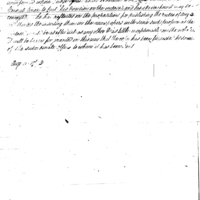
Publishing the Rules of August 3rd
Jefferson has reflected on the proposition for publishing the rules of August 3rd and thinks that inserting them in the newspapers with the appropriate preface would be as effective as any other method. -
Communications to the Committee of Inquiry
General St. Clair allowed fifty dollars for his two communications to the Committee of Inquiry which Webb hopes that Hodgdon will have no objection to paying for. Twenty dollars should cover the cost of dispositions and other papers for a total of seventy dollars.