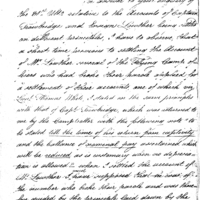
McClean laments that there has been a capital mistake in Hodgdon's failure to send knapsacks in the recent shipment of equipage. Not having knapsacks causes the soldiers continuous strife since they have nothing to keep their clothing in. He currently has eleven handsome young recruits so he will need to draw again on Hodgdon for clothing and hopes that knapsacks will be included in the next shipment.
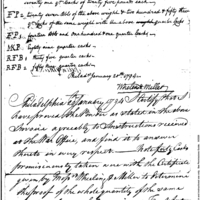
A report from a Congressional committee regarding the best course of action to take to protect the commerce of the United States against corsairs from Algeria. Proposes a number of vessels and various taxes to fund the shipbuilding and crews. Read to the House of Representatives on January 20, 1794.
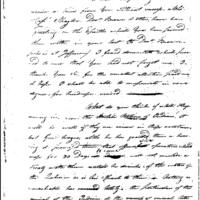
Hodgdon is asked his opinion in relation to the white flags coming in from the Six Nations of Indians. It will be well if they are sincere in their overtures but General Wayne, although he has granted them a hearing and promised them to hold off offensive operations for thirty days, will not consider a treaty with them until he drinks from the waters of the [?].
John Heth encloses the contractors certificate to the War Department Accountant, along with a muster roll of recruits. Requests money and a settlement of accounts. Money is needed for taking deserters.
Discusses accounts of Jacob Mellet, contractor at Richmond Virginia. Howell notes that payments should have been made by Captain Heth himself, as they belong to the contingencies of recruiting service.
Cabinet meeting concerning a Presidential message to Congress on the recall of Edmond Charles Genet - "Citizen Genet" - French minister to the United States. The cabinet declares Genet's conduct to have been unequivocally disapproved.
Supplement to prior letter of same date; Wayne laments the arrival of the Indians' truce flag, as he was set to seize Girtystown (now St. Mary's Ohio), in the center of the hostile tribes' region, but says he could not refuse the gesture. Truce of three days set, will not advance for that period. Considers merits of two possible treaty sites, Picquetown or Grand Glaize. Asks for instructions, and copies of past Indian treaties. Contemplates a treaty date of May 1, so if it "proves abortive" the season and rivers will be right for an immediate continuation of the offensive. Mentions Seneca chief Captain Big Tree, who is allied with Wayne and has supposedly impressed on the hostile Indians the need for fair dealing.
Wayne Informs Knox that the Indians have sent in a flag of truce, which he believes is due to the seizure of St. Clair's field and the approach to Grand Glaize. Doubts the overture is sincere, believing the Indians may just be stalling for time to remove their women and children, store winter provisions, and scout Wayne's camp -- but accepts the necessity of losing this opportunity for a quick strike. Tells that he has required strong proof of the Indians' intentions before agreeing to a treaty meeting -- one aspect being the return of prisoners held by them.
Letter from John Habersham in Georgia to the Secretary of the Treasury; makes mention of the two Creek Indians killed by a party of whites on the frontier.
The transportation expenses for moving stores to New York must be paid by Hodgdon. Apparently the business of New York is to be handled by the contractors for West Point. In the future, Smith recommends that anything that needs to be forwarded should be directed to Manning, Wycoff, & Co.
Beatty recounted the transfer of money and the collection of receipts by Mr. [Hough]. Beatty believed money came from Mr. Carleton of the War Department.
Dr. Read's account cannot be settled until it is determined when he first acted under the contract of the Secretary of War so that information is requested.