The Secretary of War writes that the British Government appears to be easing some of the tensions between them and the United States. Briefly mentions the relationship with France. Also discusses the brewing conflict between General Wayne and General Wilkinson. Knox also intimates that the pay of troops will soon be raised.
Presidential assurance of impartial justice, Wayne to be ordered to direct a court of inquiry relative to any subject Wilkinson suggests. Requests specifics to charges Wilkinson filed against Wayne.
Enclosed official thanks of House of Representatives to the militias of New Jersey, Pennsylvania, Maryland and Virginia for their successful expedition to quell western insurrection.
Following the defeat of the northern tribes at the Battle of Fallen Timbers, General Wayne proposes terms for a lasting peace that will serve the interests of both red and white people.
Knox extends the President's gratitude to Governor Mifflin and the Militia of Pennsylvania for their support of the General Government's suppression of the recent insurrection.
Copy of a speech from an Indian chief stating, "I will tell all my warriors to lay down their hatchets, and not strike any more upon you, and I hope you will do the same with yours." Still, the chief warns about his people, "there may be some foolish young men, such as those that have no home, do mischief to you; for those I cannot answer."
Jones complains of his tedious and disagreeable journey due to the total incapacity of the horses hired at Lancaster. One of the horses gave out at Wright's Ferry and another one at Laurel Hill. He has had to hire a second team to draw his wagon and baggage. The bearer was offered a third horse to take the wagon home but he refused due to the state of the roads over the mountains.
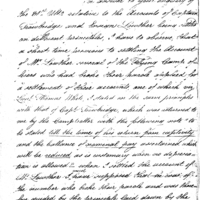
Lt. Dalcho's account current and vouchers have been received but an examination indicates that the receipts should either have been taken separately or in a manner that embraced all the estimates of separate receipts.
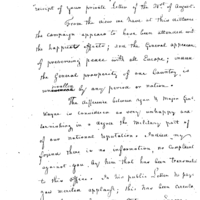
Notes that the military situation on the whole seems favorable, especially in terms of avoiding war with any European powers. Is distressed by reports of differences between Generals Wayne and Wilkinson; assures Wilkinson that the only mention of him in letters received from Wayne have praised him. Knox and the president are both in favor of a conciliation. Discusses dissension in the army; dismisses Wilkinson's inquiry about Major General Scott being placed in command of the Legion of the United States. Assures Wilkinson that his military reputation is intact, and informs him that he is soon retiring as Secretary of War.
Among many other concerns, Kalteisen expresses his anxiety at not receiving any communications from General Knox, Hodgdon, or anyone else in the War Office. He has been most attentive in writing both by post and by vessel and has given the strictest attention to every particular. He notes that there have been many complaints by the soldiers about their not receiving their pay. He has been obliged to advance them one hundred dollars of his own money to prevent murmering and perhaps worse.
Henry Knox informs Blagge that he has received letter from George Taylor asking that his father be employed as ship joiner for frigate at New York. Knox says he considers employment of artificers to be under Blagge's direction and leaves it to him to decide.
Governor Mifflin has applied for a supply of powder intended for a company of artillery who will support the patriotic militia of the city. Powder, standard cartridges, portfires, and other articles of military stores should be transported to Major John Connally who will effect the intentions of the Governor.
As a reward for their friendship and service during the Revolutionary War, the Oneidas, Tuscaroras, and Stockbridge Indians are promised a new church in addition to grist mills and saw mills and instructions in how to operate them. The Indians, in return, will relinquish all other claims for compensation and rewards.
Secretary Hamilton discusses the procuring of military supplies, which is currently under the power of the Treasury Department. Hamilton cites the extensive supplies for the Navy, along with the growth of the country, in making this job more complicated. He wishes for a "special Agent" to be employed in the Department to deal with this part of the public business.