Blount expressed pleasure in the murder of 5 Creeks by Chickasaws, but believed if the U.S. did not support the Chickasaws in their inevitable war with the Creeks, the U.S. would lose friendship with Chickasaws. Believed war between nations may be delayed due to season, and the type of deliberations that happen before Indian Nations go to war. Request guidance on how to instruct Colbert and his party.
Hodgdon asked to furnish transportation for baggage of missionaries Peter Janin and John Francis Rivet going to Pittsburgh for work with the Wabash and Illinois Indians.
Hamilton explains that he has delayed providing the money required for the New Jersey troops because he believes the estimate for that purpose is excessive. He points out that the first month's pay constitutes a poor criterion because the number of troops was greatly diminished before they left the field.
Notification that Hamilton has delayed submitting money to Treasurer, "upon the ground of the doubts intimated in my letter concerning the New Jersey troops."
Noted that the number of troops to be paid will be less than the first months pay roll. Awaiting information from Pickering in order to act.
Received urgent letter from Gen. Robertson, felt it contained important information that Sec. of War must read; forwarded letter express. Pickering enclosed his answers to Gen. Robertson.
Letter in answer to Gen. Wayne by the Chippawas, Ottawas, Patawatamies, and the Sakies, addressed to the commander at the Fort in Miami. The Four Nations rejoiced after the French Traders opened the Indians eyes. Assurances regarding the Indians trade with the French. The delegation represented in the document spoke for the village chiefs of the previously mentioned tribes. Alliance between the Chippawas, Ottawas, and the United States.
Response from the Four Nations from Michilemackinac Michigan. Message of peace, plans to meet again at the Miami villages to discuss peace again. Requests the help of the interpreter to take the good news of peace to other villages.
Wayne commends the interest in peace on the part of the Indian tribes. He reminds them of the call for an exchange of American prisoners held by the tribes for Indian prisoners held by the US. Negotiations result in arrangements for a treaty meeting at Greenville in June.
Is the enclosed account the one upon which a settlement with Doctor Gould was settled? Also there is a question regarding the number of officers in the same situation as Captain Harris. Since the pay due him was for 1780, it was scaled according to the specie value of the money in that year and he now wants the depreciation made up. If there are a number of officers in the same situation, it will influence the decision of the Commission of Claims.
Sum requested for the Jersey militia greatly exceeds amount thought necessary by Hamilton. Lists dangers associated with large sums advanced without adequate information.
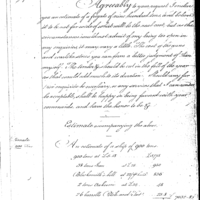
A bill for list of supplies and services performed related to ship building or maintenance. Items and services include: carpentry, blacksmithing, rigging, joining, lumber, paint, sail making services, nails. Signed by unknown author (illegible)
War Accountant informs Nathaniel Gorham that the Treasury Secretary will remit him the sum of $1837, to be paid to David Ames for the armory at Springfield, Massachusetts.
War Accountant writes Mrs. E. C. Sophia Roberts, informing her that she will receive from Nicholas Fish the sum of $115, being on the account of pay of her husband
Return of men employed the past week at the New York naval yard and materials received since the last letter; for want of proper bolts the keel is unfinished and some men have been employed at other duties.
Secretary of War Pickering discusses use of deadwood to be laid over the frigate keel; use of salting to harden the oak; and whether common oak will do, since live oak is so hard to procure. In a post script, asks if common oak can be used. If not, how long to obtain live oak and how will this affect the frigate construction time-line.
Certification that $82.40 is due David Hall, late Ensign in the Army of the United States, being for his subsistence from April 8 [?], 1792 to April 10, 1793, the day of his resignation.