Simmons certifies that $500 is due James Hackett for his salary as Constructor of the frigate building at Portsmouth, New Hampshire from Oct. - Dec. 1795, sum to be transmitted to Joshua Wentworth Esq., Supervisor of New Hampshire.
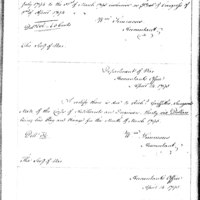
Simmons certifies that $13.07 is due the estate of Joseph Barrett, late a private of Captain Donald Mitchell's Company in the Corps of Artillerists and Engineers, being the arrearages of his pay up to Oct. 14, 1795, the day of his death.
Encloses receipt rolls for the part of the Georgia militia and scouts deemed authorized by President Washington. The balance comes to over $22,000 and has been remitted to Daniel Stevens in Charleston. Discusses additional affairs relating to muster rolls and the claims of the Georgia militia.
Informs Wentworth that the Treasurer will remit him the sum of 500 dollars for the pay of James Hackett, constituting his salary for constructing the frigate at Portsmouth. Instructs Wentworth to also pay salary to Edmund Quincy, clerk.
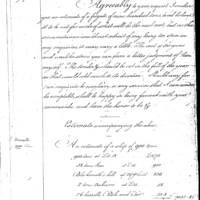
Estimate is signed by Humphreys, Francis, Truxton and Fox. Exclusive of men and provisions, estimate $453,272 to complete six frigates. Estimate $120 per ton. Quantities listed as most essential and already delivered and what is deficient, by locations of the six ship yards: Philadelphia; New York; Boston; Norfolk; Baltimore; Portsmouth New Hampshire;
Simmons reports that he has been unable to locate the muster and pay rolls Willett asked for and sends a certificate of Willett's commutation stating his day of derangement in lieu of a certificate of his service in the Revolutionary War
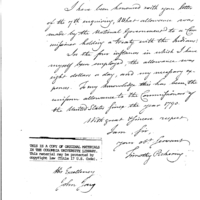
Responding to Governor John Jay's inquiry about the allowance given to Indian commissioners, Pickering states that U.S. policy since 1790 has been $8 a day plus expenses, which he knows from personal experience as an Indian commissioner.
Letter from the Secretary of War to the Governor of New York. Secretary Knox discusses the allowance paid commissioners for holding treaties with the Indians.
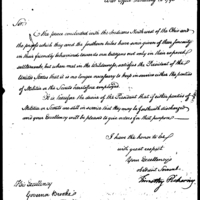
Peaceful actions of fourteen Indian tribes per agreement of peace treaty shows the employment of militia and scouts is no longer warranted. Order to discharge those still in service.
Freeman recounted the contents of letter to Howell and critiqued Capt. Dickenson's method of account keeping. Freeman offered solutions on accountability for receipts.